Buying a car today is no longer a simple choice between brands or body styles — it’s a long-term financial decision that can impact your budget for years. For modern car buyers, the debate between electric cars and gas cars has become especially important as fuel prices fluctuate, technology evolves, and ownership costs extend far beyond the sticker price. Much like comparing the advantages and disadvantages of TVs when choosing between smart models and traditional screens, buyers now face a similar decision in the automotive world: innovation versus familiarity.
While electric vehicles (EVs) often cost more upfront, they promise lower running costs, fewer moving parts, and potential incentives. Gas cars, on the other hand, remain cheaper to buy initially, easier to refuel, and familiar to most drivers. But which option truly costs less over time?
In this guide, we’ll break down total ownership costs — including purchase price, fuel or electricity, maintenance, insurance, depreciation, and long-term value. By the end, you’ll have a clear, practical understanding of how electric cars and gas cars compare financially, helping you make a confident, informed buying decision that fits your driving habits and budget.
Understanding Total Cost of Ownership (TCO)
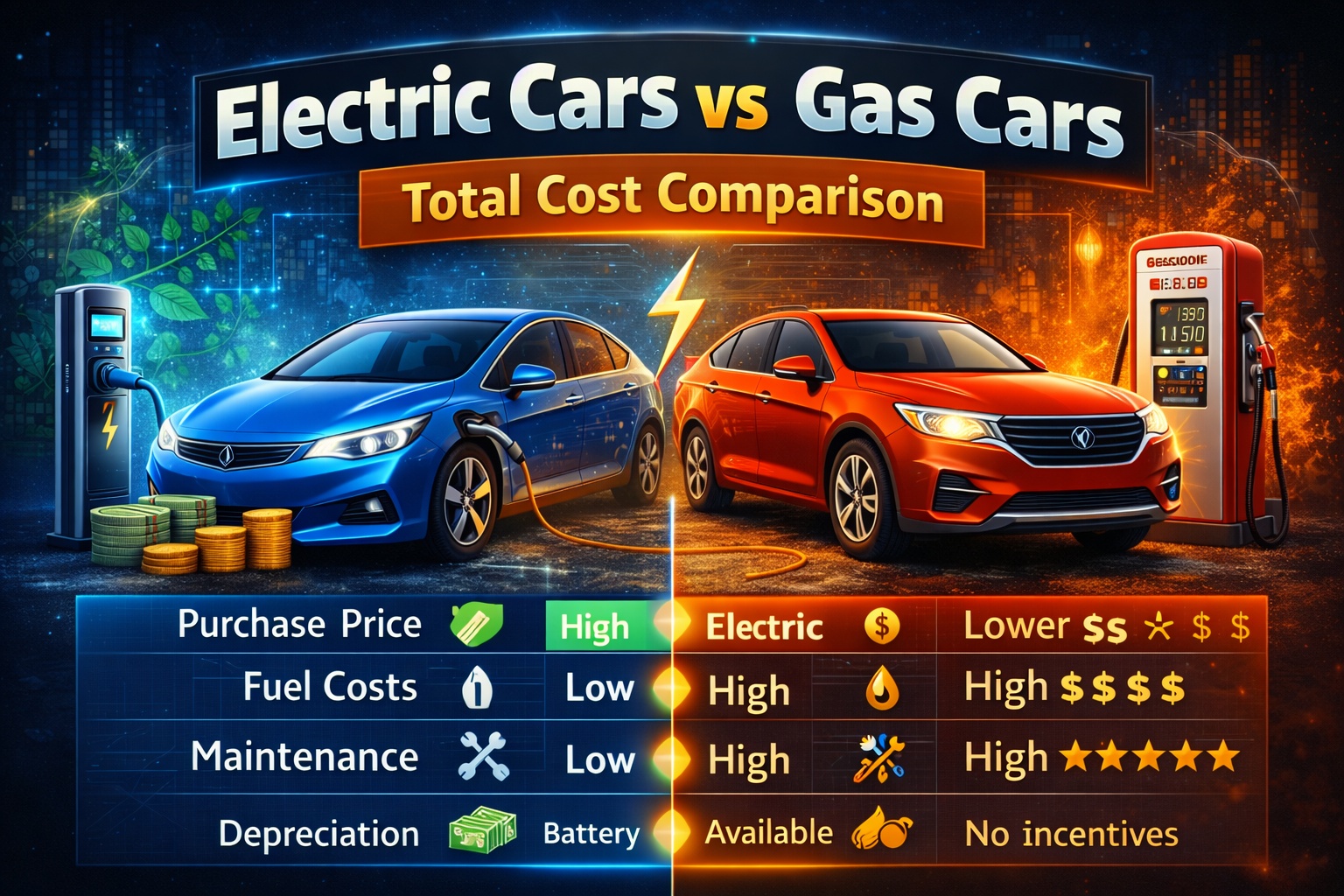
When comparing electric cars and gas cars, the purchase price is only the beginning. Smart buyers focus on Total Cost of Ownership (TCO) — the full financial picture over several years of driving.
What TCO Includes
Total cost of ownership typically accounts for:
- Purchase price
- Fuel or electricity costs
- Maintenance and repairs
- Insurance
- Taxes and incentives
- Depreciation and resale value
This approach mirrors how consumers compare the advantages and disadvantages of TVs: not just the price tag, but long-term value, features, and running costs.
Why TCO Matters More Than Ever
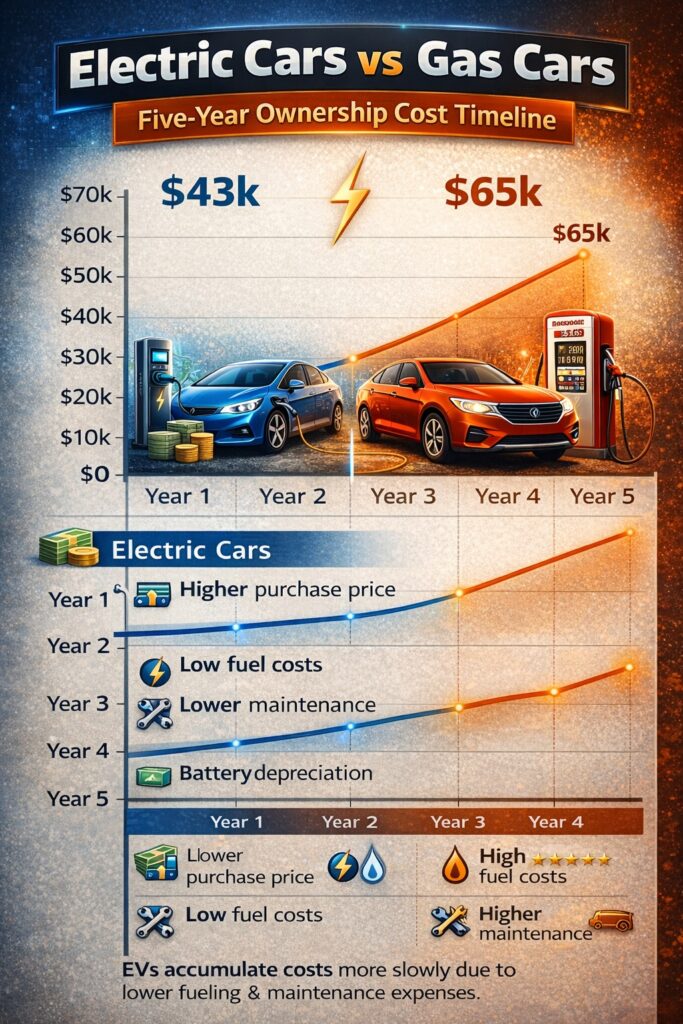
With EVs, lower operating costs can offset higher upfront prices. Meanwhile, gas cars may look cheaper initially but accumulate higher fuel and maintenance expenses over time. Buyers who only compare sticker prices often miss the bigger financial story.
Unique Insight:
Car buyers who keep vehicles longer than five years tend to benefit more from EV ownership — a pattern similar to tech buyers who invest upfront for long-term efficiency.

Upfront Costs: Purchase Price and Incentives
Electric Cars
Electric vehicles typically cost more to buy due to battery technology. However, many markets offer:
- Government tax credits
- Purchase rebates
- Reduced registration fees
These incentives can significantly narrow the price gap.
Gas Cars
Gas vehicles usually have:
- Lower initial purchase prices
- Wider availability in budget segments
- More used-car options
For buyers focused strictly on short-term affordability, gas cars often feel safer financially.
Unique Insight:
Upfront cost comparisons often ignore future fuel volatility. A low purchase price doesn’t protect against rising gas prices.
Fuel vs Electricity Costs Over Time
Gasoline Costs
Fuel prices fluctuate based on:
- Global oil markets
- Seasonal demand
- Local taxes
Over several years, fuel becomes one of the largest ownership expenses for gas cars.
Electricity Costs
Electric cars benefit from:
- Lower per-mile energy costs
- Home charging convenience
- Stable electricity pricing
Charging at home is usually cheaper than public fast charging, making driving patterns critical.
Unique Insight:
Just like smart TVs reduce cable dependence, EVs reduce dependence on fuel stations — shifting control back to the owner.
Maintenance and Repair Expenses
Why EVs Cost Less to Maintain
Electric cars:
- Have fewer moving parts
- Don’t require oil changes
- Avoid exhaust system repairs
- Experience less brake wear due to regenerative braking
Gas Car Maintenance Reality
Gas vehicles require:
- Oil changes
- Transmission servicing
- Engine repairs
- Emissions system upkeep
Over time, these costs add up significantly.
Unique Insight:
Maintenance savings in EVs are predictable, while gas car repairs become more unpredictable with age.
Insurance Costs and Risk Factors
Insurance costs depend on:
- Vehicle value
- Repair complexity
- Safety technology
EVs may have:
- Higher premiums due to battery repair costs
- Lower accident rates due to advanced driver aids
Gas cars often benefit from cheaper parts and widespread repair knowledge.
Unique Insight:
As EV repair networks expand, insurance costs are slowly stabilizing — much like early flat-screen TVs once did.
Depreciation and Resale Value
Electric Cars
EV resale values depend heavily on:
- Battery health
- Software updates
- Charging standards
Older EVs with outdated tech may depreciate faster.
Gas Cars
Gas vehicles depreciate more predictably but may lose value faster if fuel prices rise or regulations tighten.
Unique Insight:
Battery longevity now plays the same role engines once did in determining resale value.
Environmental Costs That Affect Your Wallet
Environmental regulations increasingly affect:
- Fuel taxes
- Emissions penalties
- Urban driving restrictions
EVs may qualify for:
- Access to restricted zones
- Lower ownership taxes
- Incentives for clean transportation
These factors indirectly influence long-term cost.
Quick Takeaways
- Electric cars often cost more upfront but less over time
- Gas cars remain cheaper initially but incur higher running costs
- Fuel vs electricity costs heavily impact long-term budgets
- Maintenance savings are a major EV advantage
- Depreciation patterns differ based on technology changes
- Buyer driving habits determine which option saves more
- Like comparing the advantages and disadvantages of TVs, long-term value matters more than price
Buying a car today requires thinking beyond the showroom sticker. While gas cars remain familiar and accessible, electric vehicles are steadily proving their financial value over time. The real difference isn’t just how much you pay today — it’s how much ownership costs over years of driving. Electric cars reward drivers who value predictable expenses, lower maintenance, and long-term efficiency. Gas cars still make sense for buyers prioritizing lower upfront costs and widespread refueling access. Ultimately, the smarter choice depends on your driving habits, budget horizon, and willingness to embrace new technology — much like choosing between traditional and smart TVs in a rapidly evolving market.
FAQs
- Are electric cars cheaper than gas cars in the long run?
In many cases, yes — especially for drivers who keep their vehicles long-term and charge at home. - What is the biggest hidden cost of gas cars?
Fuel and maintenance costs tend to rise significantly as vehicles age. - Do EV batteries need frequent replacement?
Most modern EV batteries are designed to last many years, often outlasting typical ownership periods. - How does depreciation differ between EVs and gas cars?
EV depreciation depends heavily on technology updates, while gas cars depreciate more steadily. - Is comparing EVs to gas cars like comparing smart TVs to regular TVs?
Yes — both involve weighing upfront costs against long-term functionality, efficiency, and value.
Message to Visitors
Are you leaning toward an electric car or sticking with gas for your next purchase? Share your thoughts in the comments and let us know what matters most to you — upfront price, long-term savings, or convenience. If this guide helped clarify your decision, consider sharing it with other car buyers exploring their options.