





For anyone considering an electric vehicle in 2026, EV battery health has become just as important as horsepower, design, or charging speed. The battery is the most expensive component in an EV, and its condition directly impacts driving range, charging performance, resale value, and overall ownership costs. Yet many buyers still treat battery care as something abstract or purely technical, rather than a practical part of daily vehicle ownership.
The good news is that modern EV batteries are far more durable than early models, and real-world data shows they can last many years when treated properly. The challenge is understanding what actually affects battery lifespan versus what’s outdated advice or online myths. Charging habits, temperature exposure, software updates, and even driving style all play a role in long-term battery health.
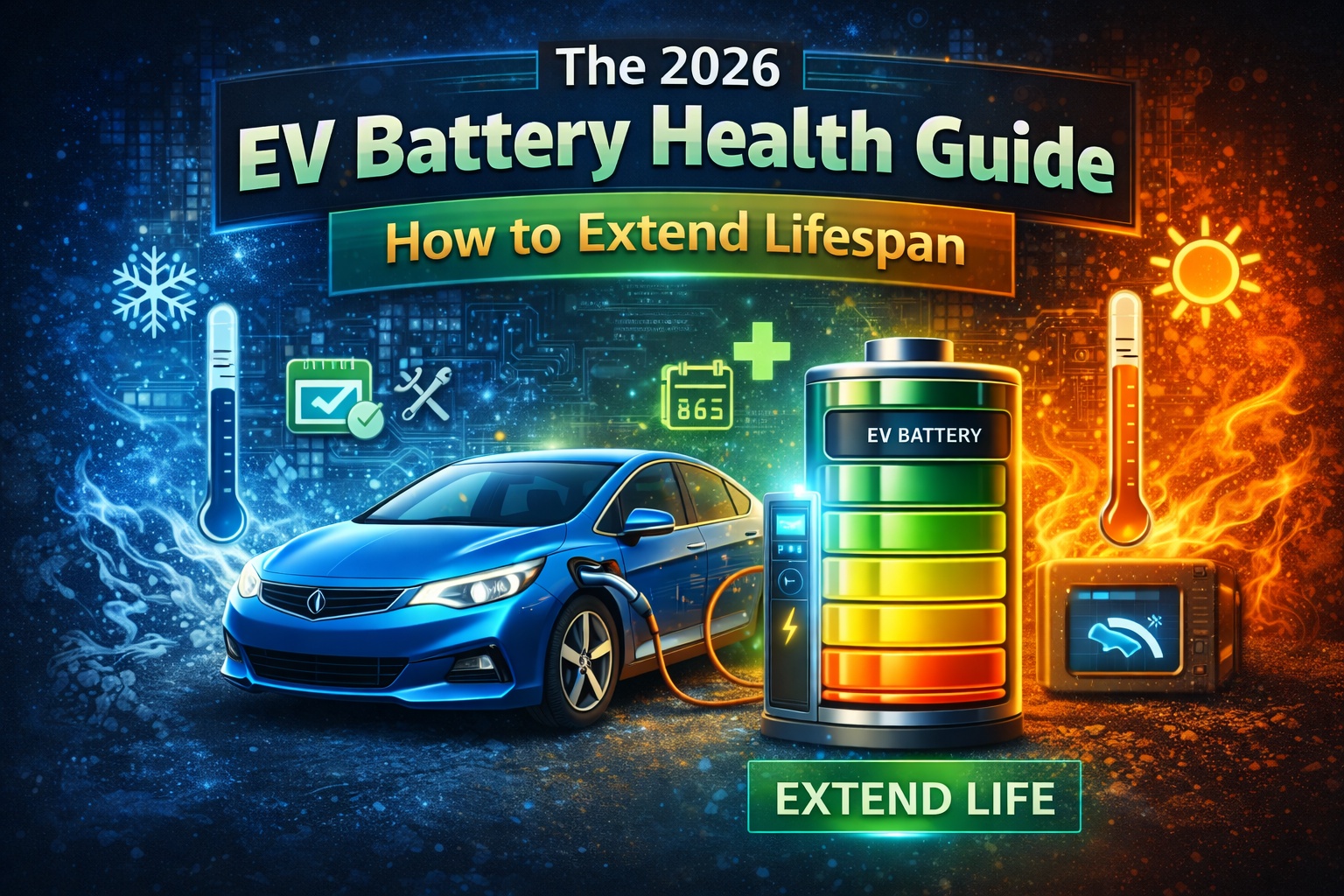
In this guide, we’ll break down how EV batteries work, what causes degradation, and the proven strategies that help extend battery life in 2026 and beyond. Whether you’re shopping for your first EV or planning to keep your current one for the long haul, this article gives you the knowledge to protect your investment and drive with confidence.
How EV Batteries Work and Why Health Matters
Electric vehicles rely almost entirely on large lithium-ion battery packs to store and deliver energy. While different manufacturers use varying chemistries, the core principles remain the same: chemical reactions inside battery cells release electricity, and over time, those reactions slowly become less efficient.
What “Battery Health” Actually Means
When people talk about EV battery health, they’re usually referring to State of Health (SOH) — a measure of how much capacity the battery retains compared to when it was new. A battery at 90% SOH can store 90% of its original energy, which translates directly into reduced driving range.
Why Battery Health Is a Buyer Priority
Battery condition affects:
- Real-world range
- Charging speed consistency
- Cold and hot weather performance
- Resale and trade-in value
For car buyers planning to keep an EV for many years, protecting battery health is essential for minimizing long-term costs.
Unique Insight:
Unlike engines, EV batteries don’t suddenly “fail” — they gradually decline. This makes proactive care far more effective than reactive fixes.
What Causes EV Battery Degradation Over Time
Battery degradation is inevitable, but the rate at which it happens varies dramatically based on usage patterns and environment.
High States of Charge
Keeping a battery at 100% for extended periods accelerates chemical stress inside cells. Most manufacturers now recommend daily charging limits between 70% and 90%.
Deep Discharging
Frequently running the battery close to 0% also increases wear. Moderate charge ranges are healthier long-term.
Heat Exposure
High temperatures are one of the biggest enemies of EV battery health. Heat speeds up unwanted chemical reactions that permanently reduce capacity.
Frequent Fast Charging
DC fast charging is convenient, but repeated use increases battery temperature and stress, especially in hot climates.
Unique Insight:
Battery degradation is more about how often stress occurs than how extreme individual events are — consistency matters more than occasional fast charging.
Best Charging Practices to Extend Battery Lifespan
Charging habits are the most controllable factor in EV battery health, and small adjustments can make a big difference over years of ownership.
Daily Charging Sweet Spot
For most EVs:
- Charge to 70–80% for daily driving
- Reserve 90–100% only for long trips
This reduces time spent at high voltage, which slows degradation.
Avoid Letting the Battery Sit Empty
If your EV won’t be driven for several days, storing it around 50% charge is ideal.
Smart Charging Schedules
Charging overnight or during cooler hours reduces heat buildup, especially in summer months.
Unique Insight:
Charging discipline works like compound interest — small habits today produce large lifespan benefits years later.
Fast Charging vs Slow Charging: What Buyers Should Know
Fast charging is one of the most misunderstood aspects of EV ownership.
DC Fast Charging
Pros:
- Extremely convenient
- Essential for road trips
Cons:
- Generates more heat
- Can accelerate degradation if used daily
Level 2 Home Charging
Pros:
- Slower, gentler charging
- Better for long-term battery health
- Lower cost per mile
Cons:
- Longer charge times
Balanced Approach
Using fast charging occasionally is perfectly safe. Problems arise when fast charging becomes the primary charging method.
Unique Insight:
Think of fast charging like sprinting — useful when needed, harmful if done constantly.
Temperature, Climate, and Battery Longevity
Climate plays a bigger role in EV battery health than many buyers realize.
Cold Weather Effects
- Temporary range loss
- Slower charging
- Increased energy use for cabin heating
Cold doesn’t permanently damage batteries as much as heat, but it affects daily performance.
Hot Weather Risks
- Accelerated chemical degradation
- Reduced long-term capacity
- Increased cooling system workload
Thermal Management Systems
Modern EVs use liquid cooling to regulate battery temperature, dramatically improving lifespan compared to early EVs.
Unique Insight:
Parking in shade or garages isn’t just comfort — it’s battery preservation.
Software Updates and Battery Health in 2026
Software now plays a central role in battery management.
Battery Management Systems (BMS)
The BMS controls:
- Charging limits
- Temperature regulation
- Cell balancing
Manufacturers regularly update BMS software to improve longevity and safety.
Why Updates Matter
Software updates can:
- Improve range estimates
- Reduce degradation rates
- Optimize charging curves
Ignoring updates can lead to suboptimal battery performance.
Unique Insight:
In 2026, battery care is as much digital as it is physical — software is the silent protector of battery health.
Driving Habits That Affect EV Battery Health
How you drive influences battery longevity more than many expect.
Aggressive Acceleration
Rapid acceleration increases power draw and heat generation.
Regenerative Braking
Using regenerative braking reduces mechanical wear and improves energy efficiency.
Consistent Driving Patterns
Smooth, predictable driving keeps battery temperature stable.
Unique Insight:
Calm driving doesn’t just save energy — it preserves battery chemistry over time.
Battery Warranties, Replacement, and Resale Value
Battery Warranties
Most EVs in 2026 offer:
- 8–10 year battery warranties
- Coverage for excessive degradation
This provides peace of mind for buyers.
Replacement Costs
Battery replacement is expensive, but prices continue to decline as technology matures.
Resale Impact
Vehicles with documented strong EV battery health command higher resale prices.
Unique Insight:
Battery health reports may soon become as standard as service records when selling EVs.
Quick Takeaways
- EV battery health directly affects range, resale value, and long-term costs
- Daily charging between 70% and 80% extends battery lifespan
- Heat is more damaging than cold for long-term battery health
- Occasional fast charging is safe, but daily use accelerates wear
- Software updates actively protect battery longevity
- Gentle driving habits reduce battery stress
- Modern EV batteries are built to last many years with proper care
Electric vehicles in 2026 are more reliable and durable than ever, but battery health remains the most important factor for long-term ownership satisfaction. By understanding how EV batteries degrade and adopting smart charging, driving, and storage habits, car buyers can significantly extend battery lifespan while preserving performance and resale value. The key takeaway is simple: EV battery health isn’t about perfection, but consistency. Small daily decisions — how much you charge, when you charge, and how you drive — quietly shape the future of your vehicle. With modern battery management systems, improved thermal controls, and generous warranties, today’s EVs are designed to reward informed owners. Treat the battery as the heart of the vehicle, and it will deliver reliable, efficient driving for many years to come.
FAQs
- How long do EV batteries typically last?
Most modern EV batteries are designed to last 8–15 years, depending on usage and care. - Is charging to 100% bad for EV battery health?
Occasional full charges are fine, but frequent 100% charging can accelerate degradation. - Does fast charging damage EV batteries?
Frequent fast charging increases heat and wear, but occasional use is safe. - Can software updates improve battery health?
Yes, updates often optimize charging behavior and thermal management. - How does EV battery health affect resale value?
Vehicles with better battery health retain higher resale and trade-in value.
Engagement Message
How do you currently charge your EV — daily top-ups or occasional full charges? Share your habits in the comments and help other car buyers learn from real-world experience. If this guide helped you understand EV battery health better, consider sharing it with anyone thinking about buying an electric car.