






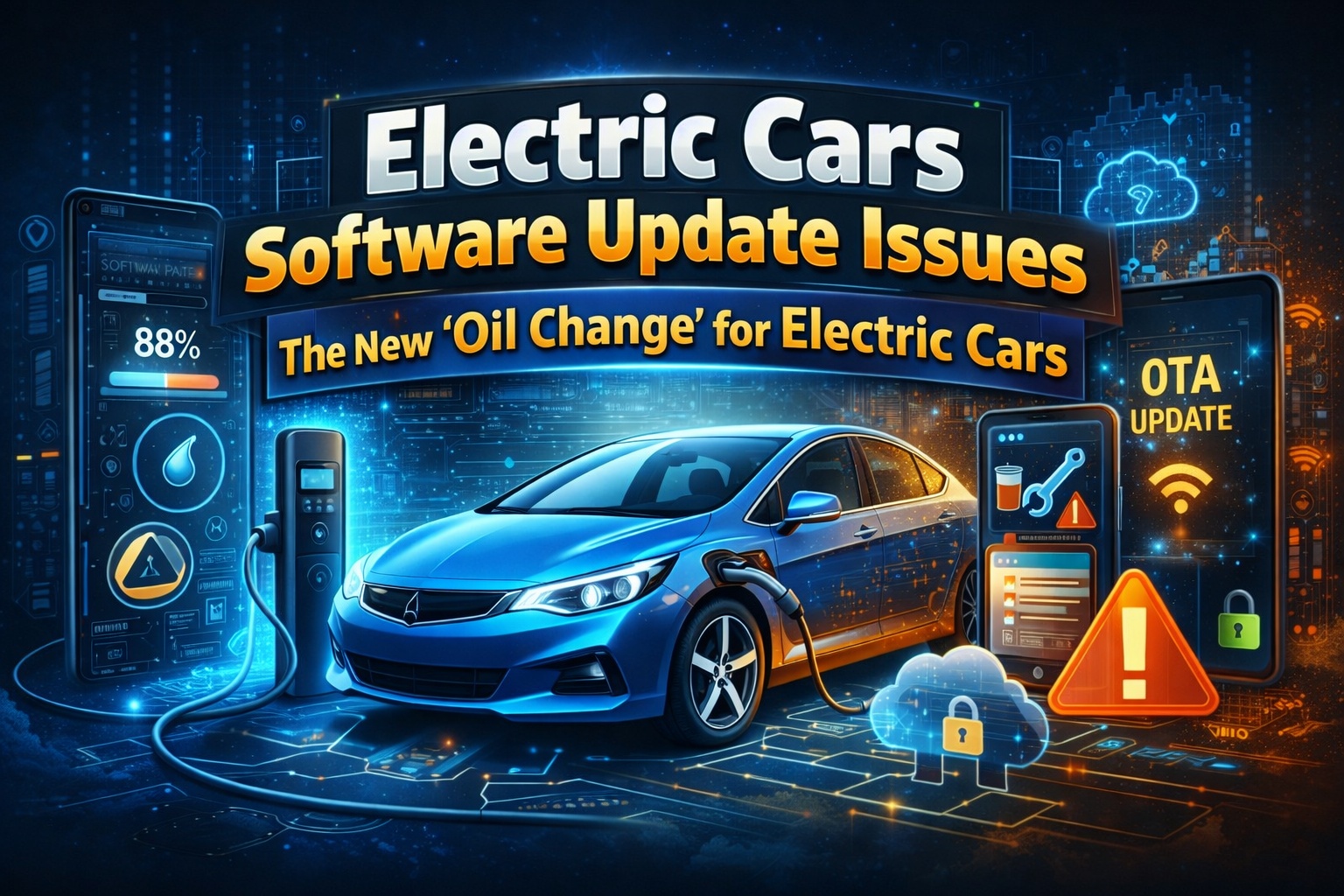
For decades, car owners knew exactly when their vehicle needed attention: the oil change sticker on the windshield told the whole story. But electric cars have quietly rewritten that rulebook. Today, the most important maintenance task often isn’t mechanical at all — it’s digital. Electric cars software update issues have become one of the defining challenges and responsibilities of modern EV ownership, shaping everything from driving range and charging speed to safety systems and resale value.
Unlike traditional vehicles, electric cars rely heavily on software to control batteries, motors, braking systems, infotainment, and even steering assistance. A single update can improve efficiency overnight — or introduce unexpected glitches if ignored. In many ways, these updates now function as the new oil change: invisible when everything works, but painfully noticeable when neglected.
In this article, we’ll explore why software updates matter so much for electric vehicles, how they differ from traditional car maintenance, the most common electric cars software update issues drivers face, and what you can do to stay ahead of problems. If you own — or are considering — an EV, this guide will help you treat software maintenance with the same seriousness as engine care once demanded.
How Software Became the Engine of Electric Cars
Electric cars aren’t just vehicles with batteries instead of engines — they are software-defined machines. In a gasoline car, software plays a supporting role. In an EV, software is central to how the car thinks, responds, and protects itself.
From Mechanical Parts to Digital Control
In traditional cars, physical components handled most operations. In electric vehicles, software controls:
- Battery temperature and charging limits
- Power delivery to electric motors
- Regenerative braking behavior
- Driver-assistance systems
- Range estimation and efficiency
- Thermal management in extreme weather
That means a minor software bug can feel like a major mechanical failure. Drivers reporting sudden range drops or slow charging often discover the root cause isn’t hardware at all — it’s outdated firmware.
Why This Shift Matters
This evolution explains why electric cars software update issues are discussed more frequently than oil leaks or transmission failures. Software now determines how well the hardware performs. Ignoring updates is like running an engine on dirty oil: it may still move, but damage builds quietly.
Unique Insight:
Many EV owners assume “no moving parts” means “no maintenance.” In reality, EVs traded mechanical wear for digital dependency — fewer breakdowns, but higher reliance on timely updates.
Why Software Updates Are the New Oil Change
Performance Depends on Code, Not Components
In gas cars, oil lubricates and protects. In electric cars, software updates optimize and protect. Updates can:
- Improve battery efficiency
- Increase charging speed
- Reduce phantom battery drain
- Smooth acceleration and braking
- Fix safety vulnerabilities
Skipping updates doesn’t immediately strand you, but over time, performance degrades — just like skipping oil changes.
Maintenance Has Become Invisible
Oil changes are obvious. Software updates happen quietly in the background, often overnight. That invisibility causes many owners to underestimate their importance — until something breaks.
The Cost of Ignoring Updates
Ignoring software updates can lead to:
- Reduced driving range
- Slower DC fast-charging
- Malfunctioning driver-assist features
- Security vulnerabilities
- Incompatibility with new chargers or apps
Unique Insight:
In EVs, maintenance intervals aren’t mileage-based anymore. They’re update-based. The smartest EV owners treat update notifications the same way drivers once treated oil change reminders.
Common Electric Cars Software Update Issues Drivers Face
1. Failed or Interrupted OTA Updates
Over-the-air (OTA) updates are convenient — until they fail. Interrupted updates can cause:
- Frozen infotainment screens
- Loss of vehicle functions
- Warning lights that won’t clear
Poor Wi-Fi, low battery charge, or interrupted power can corrupt installations.
2. Reduced Range After Updates
Some drivers notice range drops after updates, especially when battery management algorithms change. While often done to protect battery longevity, it can feel like a downgrade if not clearly explained.
3. Infotainment Bugs and Glitches
Touchscreens lagging, Bluetooth disconnects, or broken navigation are among the most common electric cars software update issues — frustrating but not always dangerous.
4. Driver-Assist Behavior Changes
Updates can modify adaptive cruise control, lane-keeping sensitivity, or braking behavior. Even improvements can feel unsettling if drivers aren’t prepared.
Unique Insight:
Most software issues aren’t failures — they’re behavior changes. Drivers struggle when updates aren’t paired with clear explanations of what changed and why.
Battery Management Updates: The Heart of EV Health
Why Battery Software Matters More Than Hardware
The battery is the most expensive component in an electric car. Software controls:
- Charging speed limits
- Temperature thresholds
- Degradation prevention
- Emergency power restrictions
An outdated battery management system can shorten battery lifespan — even if the cells themselves are healthy.
Thermal Management and Climate Effects
In extreme heat or cold, software updates can dramatically improve range stability by adjusting heating and cooling strategies.
Long-Term Battery Protection
Manufacturers sometimes limit peak charging speeds through updates to prevent long-term damage. While controversial, this is often done to avoid premature battery failure.
Unique Insight:
Battery updates are like switching from conventional oil to synthetic — short-term change, long-term protection.
Security Risks: When Software Updates Become Safety Updates
Electric cars are connected devices, not just transportation tools. That creates cybersecurity risks.
Why EVs Are Vulnerable
Modern EVs connect to:
- Mobile apps
- Cloud servers
- Charging networks
- Navigation databases
Without regular updates, vulnerabilities can expose personal data or vehicle controls.
Software Updates as Digital Seatbelts
Security patches close exploits that hackers actively look for. Ignoring updates doesn’t just risk performance — it risks privacy and safety.
Unique Insight:
In electric cars, cybersecurity is no longer optional. Software updates are now active safety systems, just like airbags or ABS.
How Manufacturers Use Software to Extend Vehicle Lifespan
Feature Improvements Over Time
Unlike gas cars, EVs can gain new features years after purchase:
- Improved range estimation
- Faster charging curves
- Better driver-assist tuning
- New infotainment features
Resale Value and Update History
Buyers increasingly ask whether a used EV is fully updated. A neglected update history can hurt resale value just like missing service records.
Unique Insight:
EVs age more like smartphones than engines — regular updates keep them feeling “new” far longer than mechanical maintenance ever could.
Best Practices for Avoiding Electric Cars Software Update Issues
Keep the Battery Charged Before Updates
Most EVs require a minimum charge level to install safely.
Use Stable Internet Connections
Weak Wi-Fi is the #1 cause of failed OTA updates.
Read Update Notes
Release notes explain changes, helping drivers adapt faster.
Schedule Updates Strategically
Install updates overnight or when the car won’t be needed for several hours.
Unique Insight:
Treat updates as planned maintenance, not interruptions.
Quick Takeaways
- Software updates are essential maintenance for electric cars
- Electric cars software update issues affect performance, safety, and range
- Battery management updates protect long-term vehicle health
- Ignoring updates can reduce resale value
- OTA failures are usually preventable with preparation
- Security updates are as important as mechanical safety
- EV ownership requires a digital maintenance mindset
Electric cars didn’t eliminate maintenance — they transformed it. Where oil once protected engines, software updates now protect batteries, performance, and safety systems. Understanding electric cars software update issues isn’t just for tech enthusiasts; it’s essential knowledge for every EV driver who wants reliable performance and long-term value.
As vehicles become increasingly software-defined, the gap between informed and uninformed owners grows wider. Those who keep their cars updated enjoy better range, smoother driving, and fewer surprises. Those who ignore updates often blame the car — when the real problem is neglected digital maintenance.
The good news is that this new “oil change” doesn’t require greasy hands or shop visits. It requires awareness, preparation, and a willingness to treat your car like the advanced computer it truly is. Stay updated, stay informed, and your electric car will reward you with years of efficient, trouble-free driving.
FAQs
1. Are software updates mandatory for electric cars?
While not legally required, skipping updates can cause performance loss and safety risks, making them essential for proper EV maintenance.
2. Can software updates reduce my EV’s range?
Some updates adjust battery management to protect longevity, which may slightly reduce displayed range while improving long-term health.
3. How often do electric cars receive updates?
Most manufacturers release updates several times per year, with critical fixes pushed immediately.
4. What happens if a software update fails?
Failed updates can cause system errors, but most are recoverable through reinstallation or dealer support.
5. Do software updates affect resale value?
Yes. Updated vehicles are seen as better maintained and more reliable by used-EV buyers.