






Choosing a car isn’t just about looks, performance, or fuel economy — safety is often the most important factor for many drivers. With advances in vehicle crash-test programs, sensor-based features, and smarter designs, today’s safest cars are engineered to protect you and your loved ones better than ever. Whether you’re shopping for a family SUV, commuter sedan, or compact city car, understanding safe cars and what makes them stand out can give you peace of mind on every journey.
In this comprehensive guide, we’ll walk through the latest crash-test ratings from trusted authorities like the Insurance Institute for Highway Safety (IIHS), National Highway Traffic Safety Administration (NHTSA) and Euro NCAP, explain key safety features to look for, and spotlight some of the top-rated vehicles across different categories. You’ll also find expert insights into how safety ratings are calculated, which technologies make a real difference, and why choosing a car with top safety scores matters more than ever. By the end of this article, you’ll feel confident identifying the best safe cars on the market and understand how they help protect you in real-world driving scenarios.
What Do Safety Ratings Really Mean? Crash Tests Explained
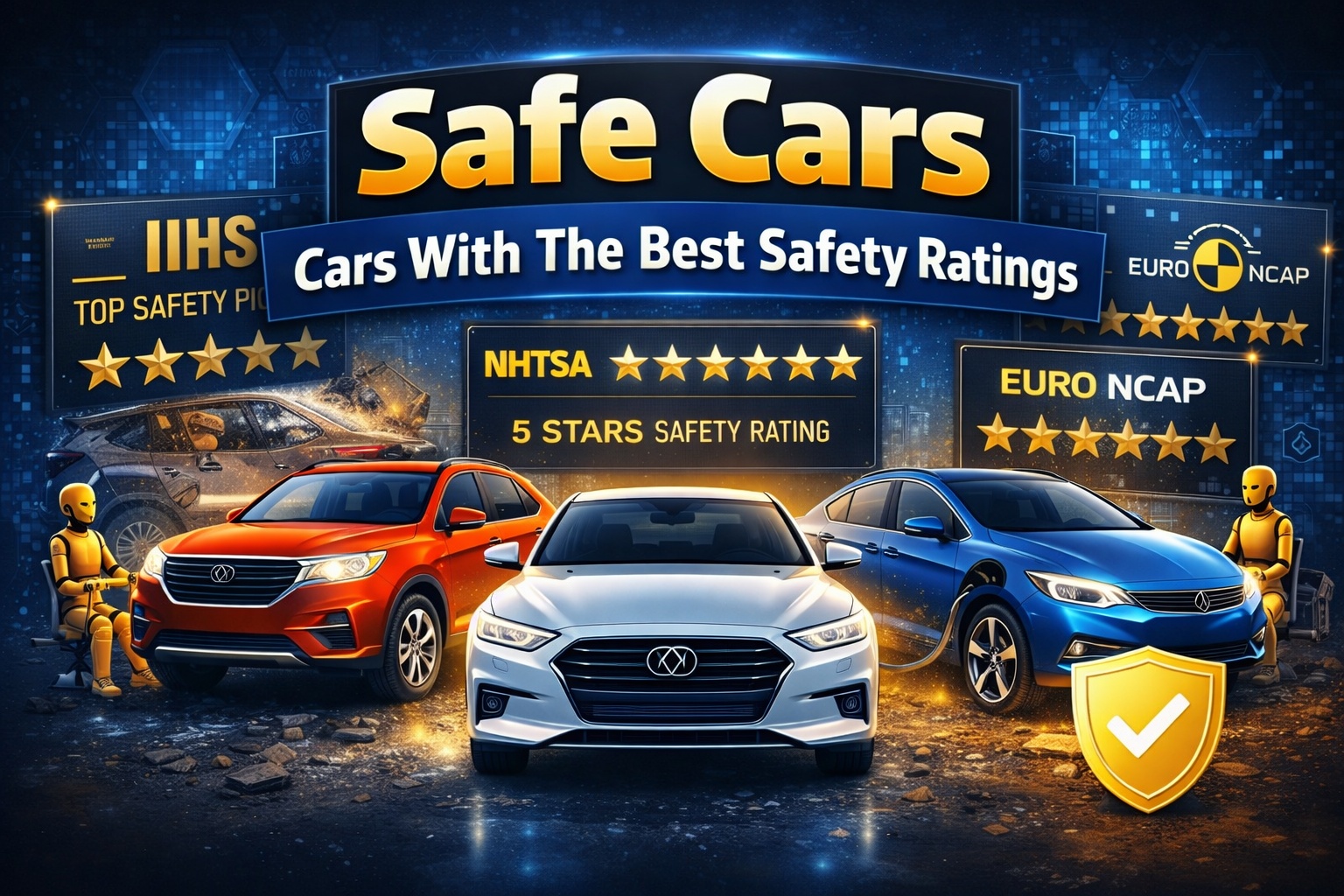
When car shoppers talk about safe cars, they’re usually referring to the scores given by independent testing programs that simulate real-world crashes and evaluate vehicle performance. The most recognized safety ratings come from agencies like IIHS, NHTSA, and Euro NCAP — each with its own testing criteria.
IIHS: A Deeper Look at Crashworthiness and Avoidance
The Insurance Institute for Highway Safety conducts rigorous tests beyond simple front-and-side impact assessments. Vehicles are evaluated for:
- Crashworthiness — how well passengers are protected in a crash
- Crash avoidance & mitigation — the effectiveness of technologies like automatic emergency braking (AEB) and lane departure warnings
Cars that perform exceptionally well may earn the Top Safety Pick+ award, which indicates strong performance across multiple tests including front, side, and rollover protection.
NHTSA’s 5-Star Safety Ratings
The National Highway Traffic Safety Administration uses a straightforward star system (1 to 5 stars) to show how vehicles fare in key crash tests, including frontal, side, and rollover resistance. A vehicle with a 5-star rating is considered among the safest in its class according to federal testing.
Euro NCAP: Safety Across Continents
In Europe, Euro NCAP performs extensive testing that includes adult occupant protection, child occupant protection, vulnerable road user safety (like pedestrians and cyclists), and safety assist technologies. Cars that achieve five-star Euro NCAP ratings are among the best performers globally.
Why This Matters for You
Safety ratings aren’t just marketing badges — they reflect real engineering outcomes that reduce the likelihood of injuries and fatalities. Modern crash tests are designed to mimic common accident scenarios, making these scores meaningful indicators of how well a car protects occupants and other road users. Many safety systems tested are now standard on new vehicles, and they play a measurable role in preventing crashes altogether.
Unique Insight:
While heavier vehicles tend to score better in traditional crash tests due to physics, the latest ratings also weigh active safety technologies — meaning smaller cars with advanced systems can outperform larger vehicles without them.
Top Safe Cars of 2026: Sedans, SUVs, and More
Let’s explore some of the safest vehicles you can buy in 2026 based on the latest crash-test results and safety assessments.
Sedans With Top Safety Ratings
Several 2026 sedans are receiving top marks from both IIHS and NHTSA:
- Honda Civic / Civic Hybrid — A perennial favorite that blends strong structural protection with advanced safety tech.
- Genesis G80 — A luxury sedan that combines premium comfort with excellent occupant protection.
- Toyota Camry — Known for reliability and safety, Toyota’s flagship sedan scores high across multiple crash test categories.
- Hyundai Sonata & Elantra — Both equipped with robust safety features and earning high marks in crash avoidance technology.
These sedans offer more than just good crash test scores; they pack standard or available safety suites like adaptive cruise control, lane keeping assist, blind-spot monitoring, and automated emergency braking.
SUVs That Excel in Safety
Safety ratings often favor SUVs due to vehicle size and advanced features. Some of the top models include:
- Honda CR-V — A balanced SUV with strong crash protection and safety tech.
- Hyundai Ioniq 5 — Combines EV efficiency with high safety ratings.
- Genesis GV80 — A luxury SUV that pairs premium features with comprehensive safety systems.
- Kia Telluride — Known for family-friendly features and strong crash performance.
SUV buyers should look at not only crash test scores but also active safety tech like pedestrian detection, intersection assist, and automatic braking support.
Unique Insight:
While electric vehicles like the Hyundai Ioniq 5 show safety performance on par with traditional SUVs, buyers should also consider vehicle footprint and center of gravity — important factors in rollover resistance.
Key Advanced Safety Technologies Worth Knowing
Safety isn’t driven by crash tests alone — many modern vehicles include technologies that help prevent crashes in the first place. These include:
Automatic Emergency Braking (AEB)
This system detects imminent collisions and applies brakes if the driver doesn’t react in time. Vehicles with strong AEB performance tend to score higher in crash avoidance ratings.
Lane Keeping Assist & Lane Departure Warning
These systems help prevent unintentional lane drift, a common cause of highway accidents.
Blind-Spot Detection & Rear Cross-Traffic Alert
These features monitor areas you can’t easily see, reducing side-impact and parking lot collisions.
Adaptive Cruise Control
By automatically adjusting speed to maintain a safe following distance, this system can lower fatigue on long drives.
Increasingly, safety ratings consider how well vehicles integrate these active safety systems, not just physical crashworthiness, reflecting a shift toward prevention and mitigation.
How to Choose the Best Safe Car for You
Choosing a vehicle based on safety ratings can feel overwhelming, but focusing on a few key questions helps:
1. What Are Your Priorities?
Are you buying for family travel, daily commuting, or both? Bigger vehicles may offer more space, but smaller cars with top safety tech can outperform them in crash avoidance.
2. Do the Safety Systems Come Standard?
Some vehicles reserve advanced features for higher trims, so check whether automatic braking, blind-spot monitoring, and lane assist are standard.
3. How Do Ratings Compare Across Programs?
IIHS, NHTSA, and Euro NCAP all evaluate safety differently. A vehicle with a top IIHS award and a 5-star NHTSA rating offers confidence on multiple fronts.
Unique Insight:
Infotainment and visibility play underrated roles in safety. Easy-to-read displays and clear sightlines help drivers respond faster to hazards — a detail not always evident in crash ratings.
Quick Takeaways
- Crash test ratings from IIHS, NHTSA, and Euro NCAP help identify the best safe cars.
- Advanced safety tech like AEB and lane assist is crucial in preventing accidents.
- Top safety-rated sedans include Honda Civic, Toyota Camry, and Genesis G80.
- SUVs like Honda CR-V and Hyundai Ioniq 5 deliver high protection scores.
- Review safety features standard on your preferred trim before purchase.
- Safety is about both occupant protection and crash avoidance systems.
When it comes to choosing safe cars, crash-test ratings are more than just numbers on paper — they represent years of engineering, testing, and real-world data designed to protect you and your loved ones. Whether you’re interested in a family sedan, a roomy SUV, or an eco-friendly electric vehicle with strong safety performance, today’s market offers many high-scoring options. By understanding how safety ratings are calculated and which features matter most, you can make a confident choice that enhances your peace of mind on the road.
As safety technology continues to evolve, today’s best vehicles do more than just protect in a crash — they help you avoid one altogether. From automatic emergency braking to blind-spot monitoring and adaptive cruise control, these features have proven benefits that complement traditional crash protection. Make sure to compare multiple safety ratings, understand standard versus optional technologies, and prioritize safety features that matter most for your daily driving needs. Choosing a safe car isn’t just smart — it’s one of the most impactful decisions you can make when it comes to protecting yourself and those you care about.
FAQs
1. What does a 5-star safety rating mean?
A 5-star safety rating from NHTSA indicates top performance across frontal, side, and rollover crash tests — a strong sign of occupant protection.
2. Are IIHS Top Safety Pick vehicles the safest overall?
Top Safety Pick awards reflect comprehensive performance in crashworthiness and crash avoidance tests, making them excellent safety choices.
3. Do electric cars have different safety ratings?
No — electric vehicles are evaluated by the same agencies (IIHS, NHTSA, Euro NCAP) using the same criteria as other vehicles.
4. Should safety features be standard on all trims?
Ideally yes — but some advanced features may be optional on base trims, so check the specifics before buying.
5. How important is pedestrian safety in ratings?
Pedestrian and vulnerable road user protection is increasingly emphasized, especially in Euro NCAP assessments.
We’d Love Your Feedback!
Which safe cars are you most interested in — SUVs, sedans, or electric cars? Tell us in the comments below! If this guide helped you, share it with friends or family who are shopping for their next safe vehicle and help them make informed choices. 🚗💬