







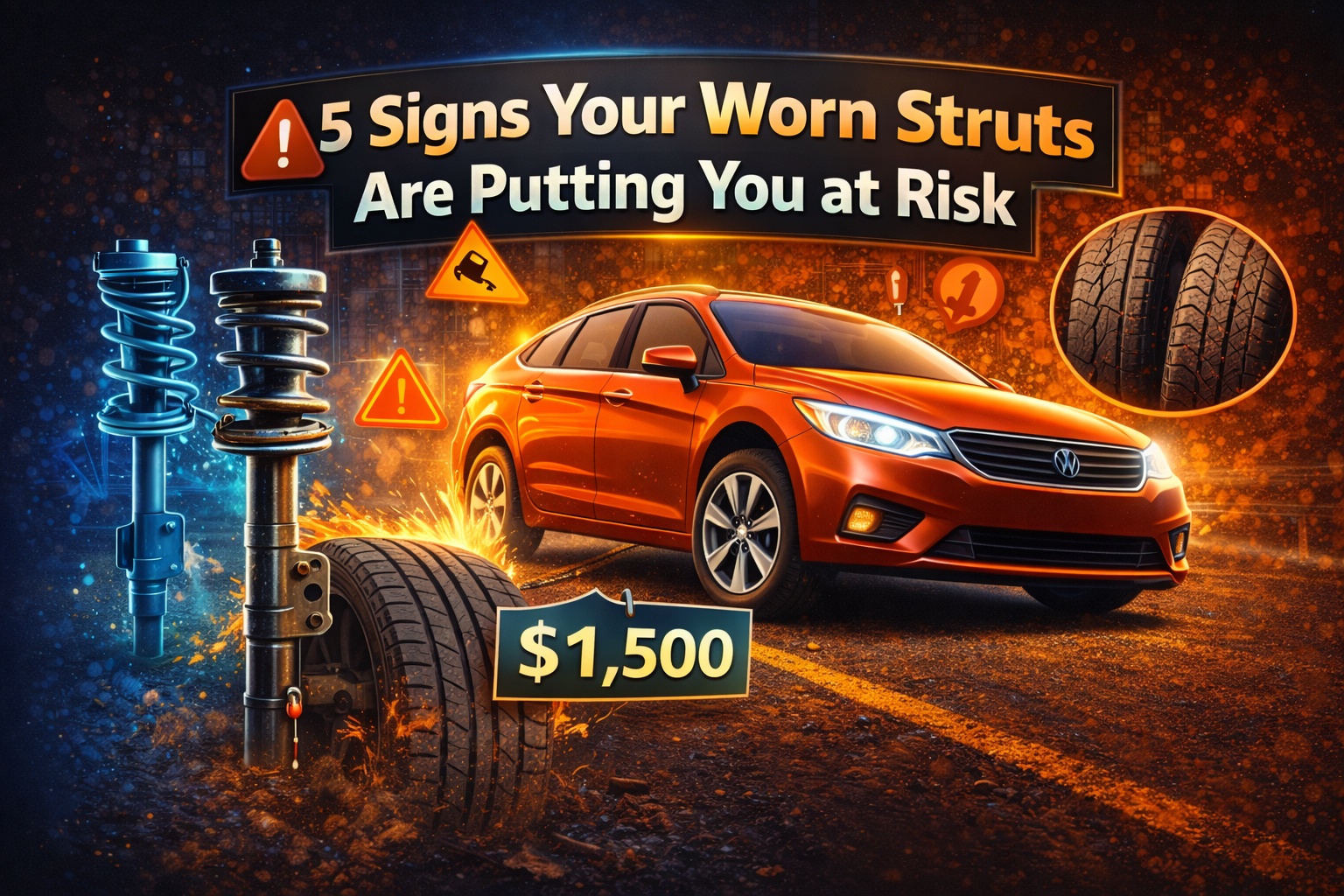
Many car buyers focus on engines, brakes, and tires when thinking about safety, but worn struts are one of the most overlooked yet critical components in a vehicle’s suspension system. Struts don’t just affect ride comfort — they directly influence steering control, braking distance, tire wear, and overall vehicle stability. When struts wear out, your car may still feel “drivable,” but its ability to respond in emergency situations can be severely compromised.
The problem is that struts usually wear out gradually. There’s rarely a sudden failure that grabs your attention. Instead, drivers adapt to the changes without realizing that handling and control have steadily declined. This is especially risky for car buyers purchasing used vehicles, where suspension wear isn’t always obvious during a short test drive.
In this guide, we’ll break down five clear signs of dangerously worn struts, explain why they matter for safety, and show you how to recognize them before they lead to costly repairs or accidents. Whether you’re inspecting a used car, maintaining your current vehicle, or simply learning what to watch for, understanding worn struts helps you make safer, smarter decisions on the road.
What Struts Do and Why Worn Struts Are Dangerous
How Struts Support Your Car
Struts are a key structural part of your vehicle’s suspension system. Unlike simple shock absorbers, struts combine damping, spring support, and steering alignment into a single assembly. They help keep your tires firmly planted on the road while absorbing bumps, controlling body movement, and maintaining proper wheel alignment.
Why Worn Struts Affect Safety
When struts wear out, they lose their ability to control motion. This leads to:
- Reduced tire contact with the road
- Longer stopping distances
- Increased body roll during turns
- Unpredictable steering response
Why Many Drivers Miss the Warning Signs
Because struts degrade slowly, drivers often mistake symptoms for “normal aging” or poor road conditions. This gradual decline makes worn struts particularly dangerous.
Unique Insight:
A car with worn struts can still pass a casual test drive but fail dramatically during sudden braking or evasive maneuvers.
Sign #1: Excessive Bouncing After Bumps
What You’ll Notice While Driving
One of the most common indicators of worn struts is excessive bouncing after hitting bumps, potholes, or speed humps. Instead of settling quickly, the car continues to bounce several times.
Why This Happens
Healthy struts dampen vertical motion. When they wear out, they can no longer control spring movement effectively.
Why It’s Dangerous
- Tires lose consistent contact with the road
- Steering becomes less predictable
- Emergency braking effectiveness drops
Even small road imperfections can upset vehicle balance when struts are worn.
Simple Bounce Test
Press down firmly on one corner of the car and release. If it rebounds more than once or twice, worn struts may be the cause.
Unique Insight:
Excessive bouncing increases stopping distance even on dry pavement — a risk most drivers never associate with suspension wear.
Sign #2: Nose Diving During Braking
What It Feels Like
When braking, especially at moderate to high speeds, the front of the car dips sharply forward. This is often subtle at first but worsens over time.
Why Worn Struts Cause Nose Dive
Struts help control weight transfer during braking. As they weaken, the front suspension compresses too easily.
Why It’s a Safety Issue
- Longer stopping distances
- Reduced rear tire traction
- Increased brake wear
In emergency stops, nose dive can make the car feel unstable and harder to control.
Used-Car Buyer Tip
Test braking from different speeds during a test drive. Excessive front-end dip is a red flag.
Unique Insight:
Nose dive often appears before bouncing, making it an early warning sign of worn struts.
Sign #3: Uneven or Accelerated Tire Wear
What You’ll See
Tires may show:
- Cupping or scalloped edges
- Uneven tread depth
- Premature wear despite proper inflation
Why Worn Struts Damage Tires
When struts can’t keep the tire firmly planted, the wheel bounces slightly as it rolls. This creates irregular contact with the road surface.
Why This Matters
- Tires wear out faster
- Road grip decreases
- Alignment adjustments won’t last
Replacing tires without fixing worn struts wastes money and doesn’t solve the root problem.
Inspection Tip
Run your hand along the tire tread. Uneven textures often indicate suspension issues rather than alignment alone.
Unique Insight:
Uneven tire wear caused by worn struts can mimic alignment problems, leading to misdiagnosis.
Sign #4: Poor Handling and Steering Instability
What Drivers Commonly Report
- Wandering at highway speeds
- Feeling disconnected from the road
- Increased body roll in corners
Why Worn Struts Affect Steering
Struts help maintain correct wheel angles. When they wear out, alignment shifts under load, causing unstable handling.
Real-World Safety Impact
- Reduced control in curves
- Higher rollover risk in tall vehicles
- Delayed steering response in emergencies
This symptom is especially dangerous in wet or icy conditions.
Used-Car Buyer Perspective
Handling issues may only appear at highway speeds or during sharp turns — conditions many test drives fail to include.
Unique Insight:
Steering instability is often blamed on tires, but worn struts are frequently the real cause.
Sign #5: Clunking Noises and Fluid Leaks
What You Might Hear or See
- Clunking over bumps
- Knocking when turning
- Oily residue near strut housing
What’s Happening Mechanically
Internal seals wear out, allowing hydraulic fluid to leak. Without fluid, damping capability drops rapidly.
Why This Is Urgent
- Sudden loss of control
- Accelerated wear on other suspension parts
- Potential damage to springs and mounts
Once leaks appear, strut replacement is no longer optional.
Unique Insight:
Leaking struts often fail inspection quickly, making them a deal-breaker for used-car purchases.
Quick Takeaways
- Worn struts reduce braking, handling, and tire grip
- Excessive bouncing is one of the earliest warning signs
- Nose dive during braking indicates loss of suspension control
- Uneven tire wear often points to suspension issues
- Steering instability increases accident risk
- Fluid leaks signal urgent strut failure
- Early detection saves money and improves safety
Worn struts are more than a comfort issue — they directly affect your car’s ability to stop, steer, and remain stable in critical situations. Because suspension wear happens gradually, many drivers don’t realize how compromised their vehicle has become until something goes wrong. For car buyers, especially those considering used vehicles, recognizing these warning signs can prevent expensive repairs and serious safety risks. Paying attention to bouncing, braking behavior, tire wear, and steering feel gives you valuable insight into suspension health. Addressing worn struts early restores handling, protects tires, and ensures your car responds predictably when it matters most.
FAQs
- How long do struts typically last?
Most struts last between 50,000 and 100,000 miles depending on driving conditions. - Can I drive with worn struts?
You can, but it significantly reduces safety, especially during braking and turns. - Do worn struts affect alignment?
Yes, worn struts can cause alignment to shift and prevent proper adjustments. - Should struts be replaced in pairs?
Yes, replacing struts in pairs ensures balanced handling and consistent performance. - Are worn struts expensive to replace?
Costs vary, but delaying replacement often leads to higher expenses from tire and suspension damage.
Have you ever noticed any of these symptoms while driving or test-driving a car? Share your experience in the comments, and if this guide helped you, consider sharing it with other car buyers who may not realize how important struts are to vehicle safety.