

Choosing a new vehicle has never been more exciting—or more confusing. With rapid advancements in electric technology, smarter safety systems, and more fuel-efficient engines, 2026 is shaping up to be one of the best years to buy a car. Whether you’re upgrading your daily driver, buying your first vehicle, or looking for something that will last for years, knowing which options truly stand out matters more than ever.
In this guide, we break down the best cars to buy in 2026 based on reliability, value, performance, and real-world ownership costs. Instead of just listing popular models, we focus on why certain cars make sense for different lifestyles and budgets. You’ll learn how electric, hybrid, and traditional gas vehicles compare, which segments offer the best long-term value, and what trends are shaping the market this year.
By the end of this article, you’ll have a clear, practical roadmap to choosing from the best cars available—without getting lost in marketing hype or spec overload.
Market Trends Shaping the Best Cars in 2026
Smarter Technology as a Standard
One major trend defining the best cars in 2026 is how advanced technology has moved from luxury to mainstream. Features like adaptive cruise control, lane-keeping assist, and collision avoidance systems are now common even in mid-priced vehicles. According to global safety reports published in 2025, cars equipped with these systems show noticeably lower accident rates, especially in urban driving.
Another big shift is infotainment simplicity. Instead of overly complex screens, manufacturers are focusing on faster interfaces, physical shortcuts, and better smartphone integration. This improves everyday usability rather than just showroom appeal—a detail many buyers overlook but appreciate long-term.
Electrification Without Compromise
Electric and hybrid vehicles are no longer niche options. Battery range improvements and expanded charging infrastructure mean that many drivers can now switch without changing habits. At the same time, modern gas engines are more efficient and cleaner than ever, keeping traditional options competitive.
Unique insight: The real advantage in 2026 isn’t choosing electric or gas—it’s choosing the drivetrain that best fits your actual driving patterns, not your aspirations.

Best Electric Cars to Buy in 2026
Practical Range and Real-World Usability
The best electric cars in 2026 focus less on extreme range numbers and more on consistent real-world performance. Vehicles offering 300–350 miles per charge now strike the best balance between battery cost, charging time, and weight. Independent road tests show that these models perform more predictably in mixed driving conditions than ultra-long-range alternatives.
Charging speed is equally important. Many top electric options can now recover 70–80% charge in under 30 minutes using fast chargers, making road trips far more practical.
Ownership Costs and Incentives
Electric vehicles continue to shine when it comes to ownership costs. Lower maintenance requirements—no oil changes, fewer moving parts—mean long-term savings. In regions with tax incentives or reduced registration fees, the cost advantage becomes even clearer.
If you’re new to EVs, our internal guide on electric car ownership basics explains charging, maintenance, and daily use in detail.
Best Hybrid Cars for Balanced Driving
Efficiency Without Range Anxiety
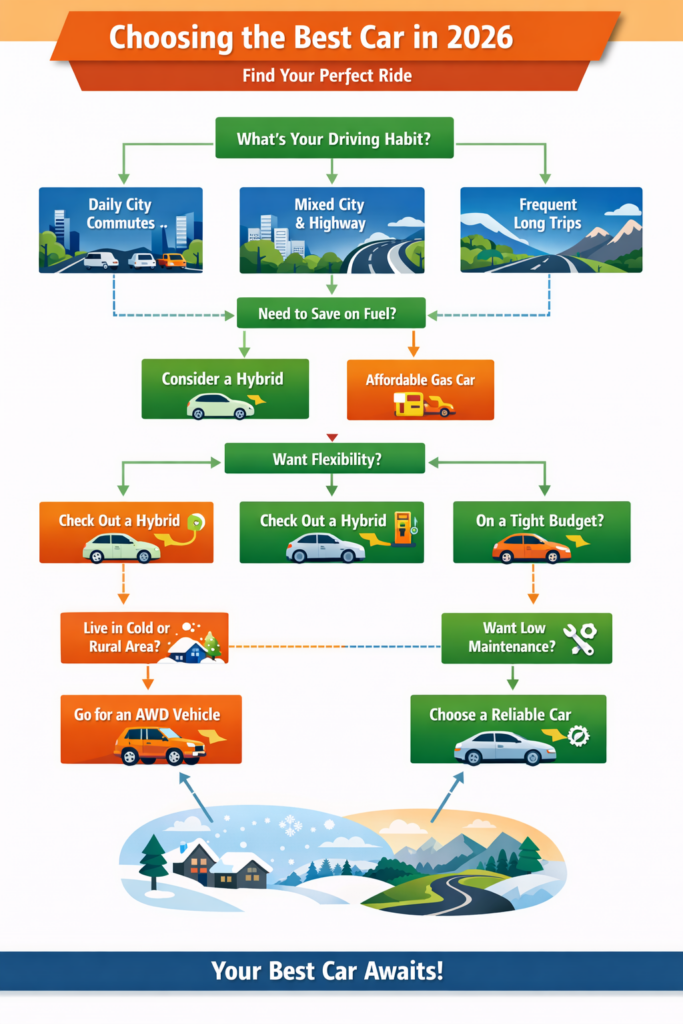
Hybrid cars remain one of the best cars to buy in 2026 for drivers who want efficiency without committing fully to electric charging. Modern hybrids deliver impressive fuel economy, especially in city driving, while still offering long highway range.
What sets 2026 hybrids apart is refinement. Transitions between electric and gas power are smoother than ever, and cabin noise is significantly reduced compared to earlier generations.
Ideal for Mixed Driving Habits
If your driving includes short city trips, occasional long drives, and unpredictable schedules, hybrids provide unmatched flexibility. They’re also a great option for buyers concerned about battery longevity, as hybrid batteries experience less stress than full EV systems.
Best Gas Cars Still Worth Buying in 2026
Improved Efficiency and Reliability
Despite the rise of electrification, gas-powered vehicles are far from obsolete. Many of the most reliable cars in 2026still use traditional engines, now optimized for better fuel efficiency and lower emissions.
New engine designs emphasize durability over raw power, which is great news for buyers planning long-term ownership. Several manufacturers now design engines specifically to exceed 200,000 miles with routine maintenance.
Lower Upfront Cost Advantage
One major advantage gas cars still hold is price accessibility. With lower upfront costs and widespread fueling infrastructure, they remain an excellent choice for budget-focused buyers or those in areas with limited charging options.
For maintenance planning, see our car maintenance tips to keep ownership costs predictable.
Best Family Cars for Safety and Comfort
Safety Comes First
Family-oriented cars in 2026 place heavy emphasis on crash prevention, not just crash protection. Advanced driver-assistance systems now work together as a package rather than isolated features, significantly reducing driver fatigue and improving reaction times.
Crash-test organizations consistently rank vehicles with integrated safety systems higher than those offering optional add-ons.
Space, Comfort, and Flexibility
Interior design has improved dramatically. Flat floors, modular seating, and smarter storage solutions make family cars more versatile without increasing vehicle size. This is especially important for urban families balancing parking constraints with interior space needs.
Best Cars for Long-Term Value and Resale
Depreciation Matters More Than Price
One of the biggest mistakes buyers make is focusing solely on purchase price. The best cars often cost slightly more upfront but lose value more slowly. Vehicles with strong reliability records, efficient engines, and broad appeal tend to retain resale value far better.
Brand Reputation and Maintenance History
Cars with proven platforms and long production runs typically outperform newer, experimental models in resale markets. Buyers in 2026 are increasingly data-driven, using reliability reports and ownership statistics to guide decisions.
Quick Takeaways
- Best cars in 2026 balance technology, reliability, and real-world usability
- Electric cars shine in low maintenance and daily efficiency
- Hybrids offer flexibility without charging concerns
- Gas cars still make sense for budget and long-distance driving
- Safety systems matter more than horsepower for most drivers
- Long-term value depends on depreciation, not sticker price
The automotive landscape in 2026 offers something rare: genuine choice without compromise. Whether you’re drawn to electric efficiency, hybrid versatility, or the proven dependability of gas engines, today’s best cars are more refined, safer, and smarter than ever before.
The key is matching the vehicle to your real needs. Daily commute length, charging access, family size, and long-term plans matter far more than trends or marketing buzz. Buyers who focus on total ownership cost, safety performance, and reliability data consistently report higher satisfaction years down the line.
As you narrow your options, take time to test drive multiple categories, not just models. The best decision often comes from comparison rather than brand loyalty. If this guide helped clarify your choices, explore more in-depth reviews and ownership guides on cars-blog.net—and feel confident knowing you’re choosing from the very best cars to buy in 2026.
FAQs
1. What are the best cars to buy in 2026 for long-term ownership?
Cars with proven reliability, low maintenance costs, and strong resale value perform best over time.
2. Are electric cars worth buying in 2026?
Yes, especially for daily driving. Charging infrastructure and battery reliability have improved significantly.
3. Which cars have the lowest cost of ownership?
Electric and hybrid vehicles typically offer the lowest long-term costs when maintenance and fuel are considered.
4. Is it better to buy new or used in 2026?
Both can be smart choices. New cars offer better tech and warranties, while used cars provide faster depreciation savings.
5. What type of car is best for mixed city and highway driving?
Hybrid cars are often the best balance for efficiency, flexibility, and ease of use.
We’d love to hear from you.
Which type of car are you considering in 2026—and what matters most to you when buying?
If you found this guide helpful, feel free to share it with friends or family who are car shopping this year.


