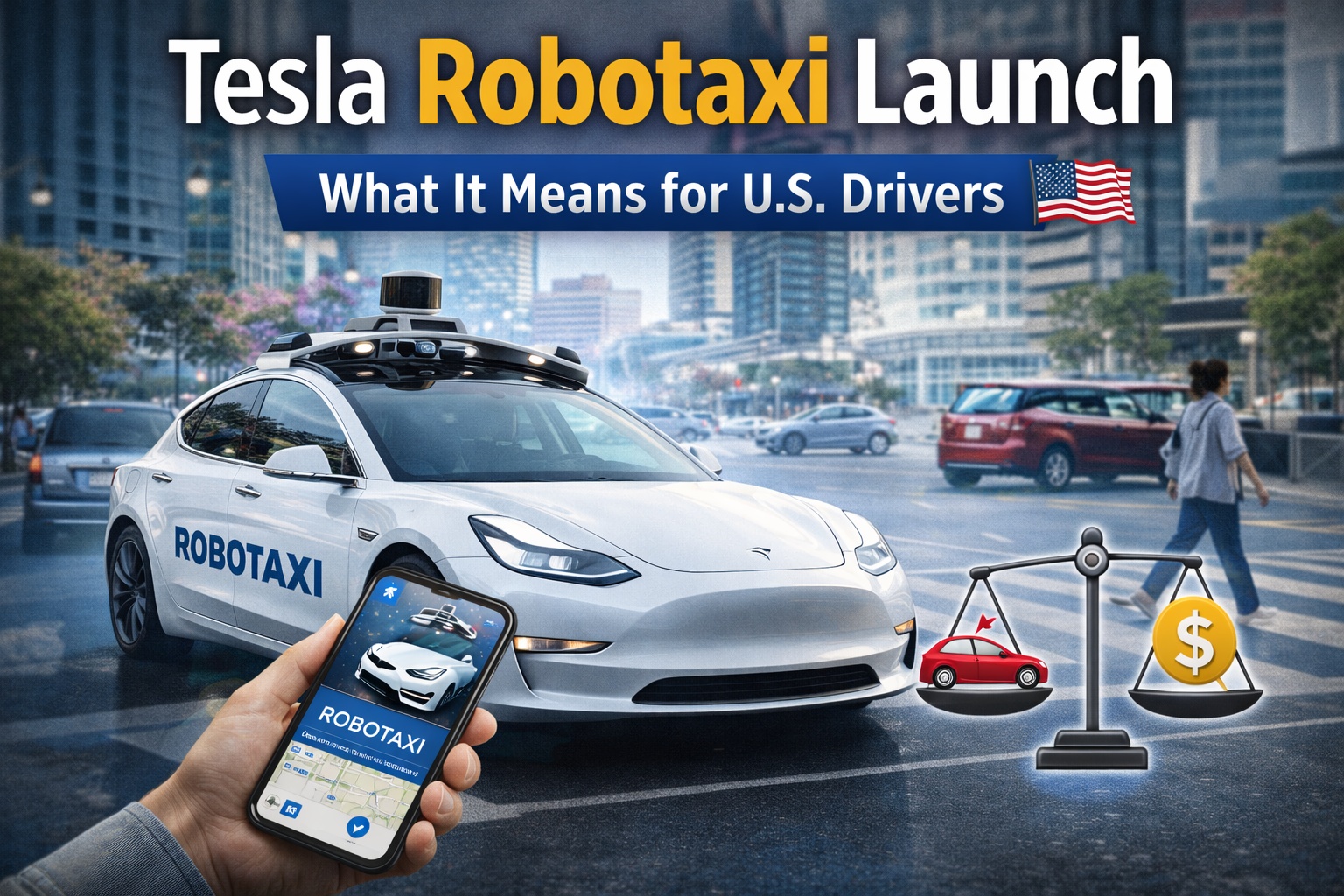
The long-anticipated Tesla Robotaxi launch represents one of the most disruptive moments in modern automotive history. For years, Tesla has promised a future where cars drive themselves, eliminate the need for human drivers, and dramatically lower the cost of transportation. Now, with Tesla preparing to roll out Robotaxi services in select U.S. markets, that future is closer than ever—and it has major implications for everyday drivers, car buyers, and anyone considering their next vehicle purchase.
Unlike traditional ride-hailing services, the Tesla Robotaxi model is built around full vehicle autonomy, software-driven upgrades, and a network approach that turns privately owned vehicles into income-generating assets. For U.S. drivers, this raises important questions: Will owning a car still make sense? How safe is autonomous driving in real-world traffic? And how might Robotaxi services affect insurance, resale values, and daily commuting?
This guide explores what the Tesla Robotaxi launch really means for American drivers. We’ll break down how the system works, where it’s launching, how it could change car ownership, and what buyers should consider before choosing a Tesla in a rapidly shifting mobility landscape.
What Is Tesla Robotaxi and How Does It Work?
The Tesla Robotaxi concept goes far beyond a traditional self-driving car. It’s designed as a fully autonomous transportation network, powered by Tesla’s Full Self-Driving software and connected through a centralized platform.
The Core Idea Behind Tesla Robotaxi
At its core, Tesla Robotaxi allows a Tesla vehicle to operate without a human driver and provide paid rides to passengers. These vehicles can be owned by Tesla or by individual owners who choose to add their cars to the Robotaxi network when they’re not in use.
The system relies on:
- Tesla’s Full Self-Driving software
- Real-time AI decision-making
- Continuous over-the-air updates
- A centralized ride-dispatch platform
For U.S. drivers, this introduces a radical shift in how cars are used. A vehicle is no longer idle for most of the day—it becomes a potential revenue source.
How Riders Use the Service
Passengers request rides through a mobile app, similar to existing ride-hailing platforms. The difference is that there’s no driver, which significantly reduces operating costs. Lower costs could translate to cheaper fares, particularly in urban areas.
How Owners Can Participate
Tesla owners with compatible vehicles may opt into the Robotaxi network. When enabled, their car can provide rides autonomously, generating income that helps offset ownership costs like loan payments or insurance.
This blurs the line between car ownership and small-scale transportation entrepreneurship, especially for tech-savvy U.S. drivers.
Where Tesla Robotaxi Is Launching and Why It Matters
Tesla is taking a phased approach to its Robotaxi rollout, focusing on specific U.S. locations first.
Initial Launch Cities
Early Robotaxi deployments are expected in cities with:
- Favorable weather conditions
- Supportive regulatory environments
- Well-mapped urban infrastructure
Sunbelt states and tech-friendly cities are likely first adopters, giving Tesla a controlled environment to refine the system before nationwide expansion.
Why Location Matters for Safety and Adoption
Autonomous driving performs best in predictable environments. Launching in carefully selected cities reduces risk and builds public confidence. For U.S. drivers living outside these areas, Robotaxi availability may come later—but its influence on car buying decisions begins immediately.
Regional Impact on Driving Habits
In cities where Tesla Robotaxi operates widely, residents may:
- Drive less frequently
- Delay buying a second car
- Rely on autonomous rides for commuting
This gradual behavior shift could reshape how Americans think about vehicle ownership, especially in urban and suburban areas.
How Tesla Robotaxi Could Change Car Ownership in the U.S.
One of the biggest questions surrounding the Tesla Robotaxi launch is how it will affect personal car ownership.
From Ownership to Access
For decades, owning a car has been essential for mobility in the U.S. Robotaxi services challenge that assumption by offering on-demand transportation without ownership responsibilities.
Some drivers may decide:
- Not to replace an aging vehicle
- To downsize from two cars to one
- To rely on Robotaxi for daily commuting
Financial Implications for Car Buyers
Robotaxi could lower the total cost of mobility. Instead of paying for:
- Maintenance
- Insurance
- Fuel or charging
- Depreciation
Drivers may simply pay per ride. For some households, this could be cheaper than owning a car outright.
Ownership as an Investment
Conversely, some buyers may purchase Tesla vehicles specifically to earn Robotaxi income. This shifts car buying from a depreciating expense to a semi-productive asset, a mindset rarely associated with vehicles in the U.S.
Safety, Trust, and Public Perception
Safety remains the most critical factor influencing Robotaxi adoption.
How Tesla Approaches Autonomous Safety
Tesla emphasizes a camera-based vision system combined with AI trained on billions of miles of driving data. The company argues this approach mimics human perception more closely than sensor-heavy alternatives.
Public Concerns and Skepticism
Many U.S. drivers remain cautious about fully autonomous vehicles. Common concerns include:
- Unpredictable pedestrian behavior
- Complex urban traffic
- Weather conditions
- Software errors
Trust will grow gradually, driven by real-world performance rather than marketing claims.
Why Early Experiences Matter
The first Robotaxi rides will shape public opinion. A smooth, incident-free rollout could accelerate adoption, while early failures may slow it significantly.
Tesla Robotaxi vs Traditional Ride-Hailing Services
Robotaxi introduces a fundamentally different business model compared to Uber or Lyft.
Cost Structure Differences
Without human drivers, Tesla Robotaxi eliminates labor costs, the largest expense in ride-hailing. This could lead to:
- Lower fares for riders
- Higher margins for Tesla
- More consistent pricing
Driverless Convenience
Passengers don’t need to interact with a driver, which some users may prefer for privacy or consistency. Vehicles are also designed to optimize comfort and cleanliness through standardized processes.
Competition and Market Pressure
Traditional ride-hailing platforms may be forced to:
- Invest heavily in autonomy
- Adjust pricing models
- Focus on niche markets
For U.S. drivers, increased competition could mean cheaper, more reliable transportation options.
Impact on Insurance, Regulation, and Liability
Robotaxi challenges existing legal and insurance frameworks.
Who Is Liable in an Accident?
When no human driver is involved, responsibility may shift toward:
- Vehicle manufacturers
- Software providers
- Fleet operators
This could simplify insurance for passengers but complicate it for owners participating in the Robotaxi network.
Regulatory Landscape in the U.S.
Each state regulates autonomous vehicles differently. Tesla must navigate a complex patchwork of laws, which affects where and how quickly Robotaxi expands.
Insurance Costs for Owners
Tesla may offer specialized insurance products tailored to Robotaxi usage. For owners, this could mean:
- New pricing models
- Usage-based premiums
- Different coverage structures
How Tesla Robotaxi Influences Buying a Tesla Today
For car buyers considering a Tesla, Robotaxi adds a new dimension to the decision.
Buying With Robotaxi in Mind
Some buyers may choose models specifically compatible with Robotaxi features. Software capability becomes as important as horsepower or range.
Resale Value Considerations
Vehicles capable of autonomous operation may retain value better than traditional cars, especially if Robotaxi participation remains profitable.
Risk vs Reward for Buyers
While the income potential is attractive, buyers must weigh:
- Regulatory uncertainty
- Software timelines
- Market demand for autonomous rides

Quick Takeaways
- Tesla Robotaxi aims to redefine transportation through full vehicle autonomy
- U.S. drivers may rely less on car ownership in Robotaxi-enabled cities
- Owners could generate income by adding their Tesla to the Robotaxi network
- Safety and public trust will determine adoption speed
- Robotaxi could significantly lower ride-hailing costs
- Insurance and liability rules are still evolving
- Tesla Robotaxi may influence how Americans choose their next car
The Tesla Robotaxi launch signals a turning point in how Americans move, commute, and think about cars. For U.S. drivers, it introduces both opportunity and uncertainty. On one hand, autonomous ride services promise lower transportation costs, reduced stress, and new income possibilities for vehicle owners. On the other, they challenge deeply ingrained habits around driving, ownership, and personal control behind the wheel.
As Robotaxi services expand, drivers will need to reassess what they truly value in a vehicle. Is it independence, or convenience? Ownership, or access? For some, Robotaxi will replace daily driving altogether. For others, it will complement personal vehicles rather than replace them. Either way, Tesla Robotaxi is not just a new service—it’s a catalyst for a broader transformation of mobility in the United States.
Frequently Asked Questions
- What is Tesla Robotaxi?
Tesla Robotaxi is an autonomous ride service that uses self-driving Tesla vehicles to transport passengers without human drivers. - When will Tesla Robotaxi launch in the U.S.?
The rollout is expected to begin in select U.S. cities first, expanding gradually as regulations and infrastructure allow. - Can Tesla owners earn money with Robotaxi?
Yes, eligible owners may add their vehicles to the Robotaxi network and earn income when their car provides rides. - Is Tesla Robotaxi safe for passengers?
Tesla emphasizes AI-driven safety systems and continuous software updates, though public trust will depend on real-world performance. - Will Tesla Robotaxi replace owning a car?
For some drivers, especially in urban areas, Robotaxi may reduce or eliminate the need for personal car ownership.
Thanks for reading!
Do you see yourself using a Tesla Robotaxi, or would you still prefer driving your own car? Share your thoughts and join the conversation—your perspective helps shape the future of mobility. 🚗🚀