
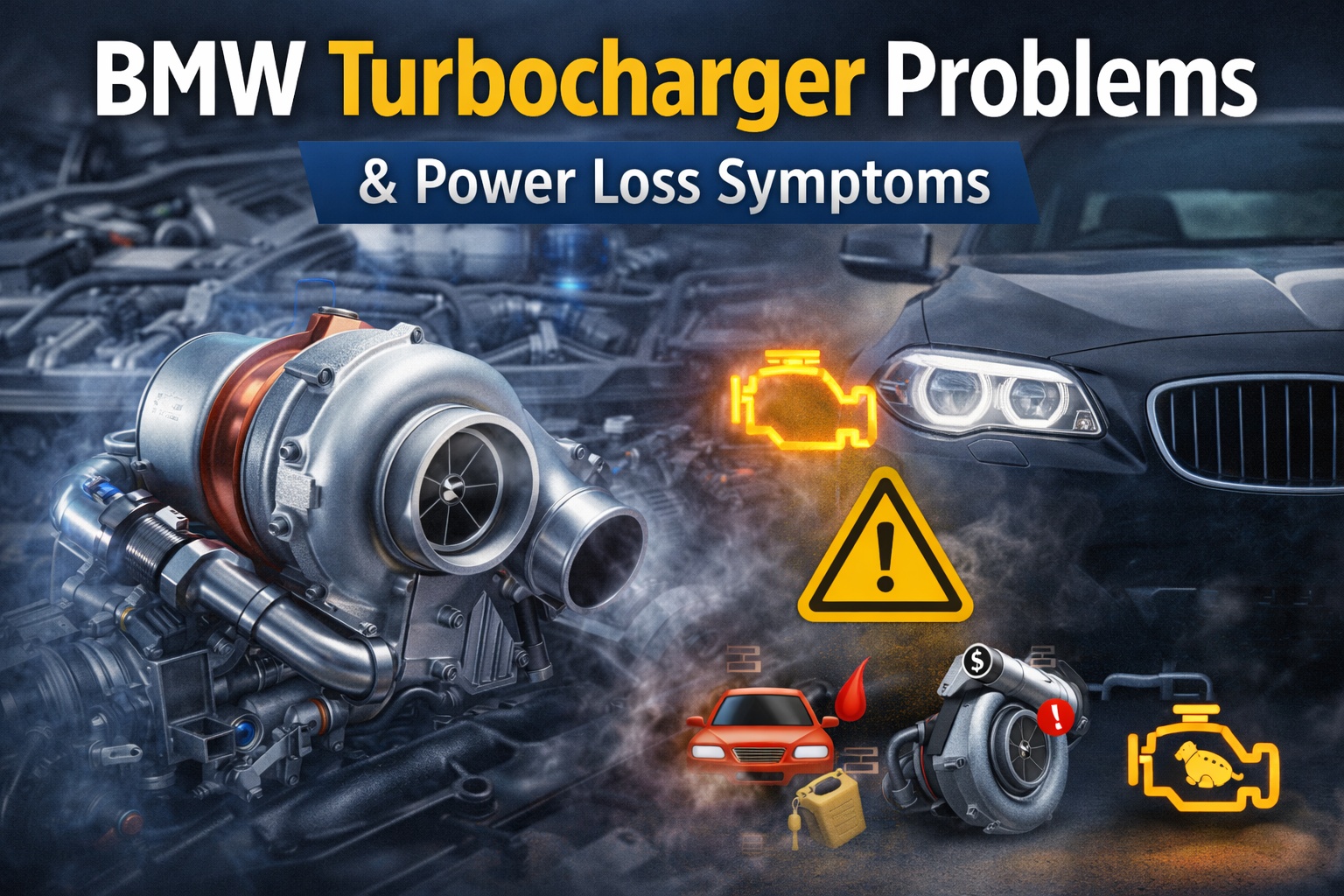
Modern BMW vehicles are known for combining performance, efficiency, and driving pleasure, and turbocharging plays a major role in that formula. From compact sedans to high-performance SUVs, BMW relies heavily on turbochargers to deliver strong acceleration while meeting strict emissions and fuel economy standards. However, BMW Turbocharger Problems have become a frequent concern among owners and potential buyers, especially as vehicles age or accumulate higher mileage.
Power loss, sluggish acceleration, warning lights, and unusual engine noises are some of the most common symptoms linked to turbocharger issues. For car buyers considering a used BMW, understanding how these problems develop—and how expensive they can be—can make the difference between a smart purchase and a costly mistake. Turbo failures don’t always happen suddenly; they often start with subtle performance changes that are easy to overlook.
In this guide, we’ll break down how BMW turbochargers work, the most common turbo-related failures, early warning signs of power loss, repair costs, and what buyers should check before committing to a turbocharged BMW. Whether you’re shopping for your first BMW or already own one, this article will help you recognize problems early and make informed decisions.
How BMW Turbochargers Work and Why They Fail
BMW turbochargers are designed to increase engine power by forcing additional air into the combustion chamber. While the concept is simple, the execution is complex and places extreme stress on components.
Turbocharger Design in BMW Engines
BMW uses a variety of turbo setups, including single turbo, twin-scroll turbo, and twin-turbo configurations. These systems spin at extremely high speeds—often exceeding 150,000 RPM—while operating under intense heat and pressure. This allows smaller engines to produce power comparable to larger naturally aspirated engines.
However, this performance comes at a cost. Turbochargers rely heavily on clean oil flow, precise boost control, and proper cooling. Even minor issues in these areas can accelerate wear.
Why Turbochargers Are a Common Weak Point
Turbochargers are exposed to:
- High exhaust temperatures
- Oil contamination
- Carbon buildup
- Repeated heat cycles
Over time, seals wear out, bearings degrade, and internal components lose efficiency. In BMW engines, extended oil change intervals and aggressive driving habits can further shorten turbo lifespan.
Many BMW turbocharger problems don’t stem from poor design alone, but from how sensitive the system is to maintenance quality.
Common BMW Turbocharger Problems Owners Experience
Turbocharger failures in BMW vehicles often follow predictable patterns. Recognizing these common issues can help buyers and owners act before serious damage occurs.
Turbo Oil Leaks and Seal Failures
One of the most reported BMW turbocharger problems is oil leakage. Turbochargers rely on engine oil for lubrication, and worn seals can allow oil to leak into the intake or exhaust system.
This often leads to:
- Blue or gray smoke from the exhaust
- Burning oil smells
- Increased oil consumption
Left untreated, oil leaks can damage catalytic converters and oxygen sensors, adding to repair costs.
Wastegate Rattle and Boost Control Issues
BMW wastegate rattle is a well-known issue, especially on higher-mileage turbo engines. The wastegate regulates boost pressure, and when its components wear out, drivers may notice rattling noises during acceleration or deceleration.
In some cases, the issue is only noisy. In others, it leads to inconsistent boost pressure, reduced power, or engine fault codes.
Turbo Bearing Wear and Shaft Play
As bearings wear, the turbo shaft may develop excessive play. This reduces efficiency and can eventually cause complete turbo failure. Early signs often include whistling noises or a noticeable drop in acceleration.
Ignoring bearing wear can lead to catastrophic turbo failure, sending metal fragments into the engine.
Power Loss Symptoms Linked to BMW Turbocharger Problems
Power loss is often the first symptom that prompts owners to seek diagnosis. Understanding how turbo issues translate into driving behavior is critical for buyers evaluating a used BMW.
Sluggish Acceleration and Delayed Boost
A healthy turbo provides strong, smooth acceleration. When problems arise, drivers may notice delayed throttle response or a lack of power during overtaking or highway merging.
This is often caused by:
- Boost leaks
- Faulty boost control valves
- Wastegate malfunctions
These issues may not trigger immediate warning lights, making them easy to overlook during a short test drive.
Limp Mode and Reduced Engine Output
When the engine control unit detects abnormal boost pressure or temperature readings, it may activate limp mode. This significantly reduces power to protect the engine.
Limp mode is commonly associated with BMW turbo underboost or overboost errors. While it may reset temporarily, repeated activation is a sign of deeper turbocharger problems.
Inconsistent Power Delivery
Some BMW owners report fluctuating power, where the car feels strong one moment and weak the next. This inconsistency often points to sensor-related turbo issues or failing boost solenoids.
For buyers, inconsistent power is a red flag that warrants a professional inspection.
BMW Turbocharger Problems by Engine Type

Not all BMW turbo engines experience issues in the same way. Understanding engine-specific trends helps buyers assess risk more accurately.
Single Turbo BMW Engines
Single turbo engines tend to be simpler and slightly more reliable due to fewer components. However, they are still prone to oil leaks, wastegate wear, and bearing failure if maintenance is neglected.
Twin-Scroll and Twin-Turbo Engines
Twin-scroll and twin-turbo setups offer improved performance but introduce additional complexity. More components mean more potential failure points, especially as mileage increases.
In some cases, one turbo may fail before the other, leading to uneven power delivery and higher repair costs.
High-Performance BMW Models
Performance-oriented BMW models place even greater stress on turbochargers due to aggressive tuning. While exhilarating to drive, these vehicles require stricter maintenance discipline to avoid premature turbo failure.
What Causes BMW Turbocharger Problems to Appear Early
Turbochargers are not inherently fragile, but certain conditions accelerate wear dramatically.
Extended Oil Change Intervals
BMW’s long oil change intervals are a contributing factor to turbocharger problems. Over time, oil degrades, thickens, and loses its protective qualities, leading to increased friction and heat inside the turbo.
Shorter oil change intervals can significantly extend turbo lifespan.
Cold Starts and Aggressive Driving
Hard acceleration before the engine and oil reach operating temperature puts immense stress on turbo components. Repeated cold-start abuse is a common cause of early turbo wear.
Poor Cooling and Heat Soak
After spirited driving, shutting the engine off immediately can cause oil to overheat inside the turbo, leading to carbon buildup. Allowing the engine to idle briefly before shutdown helps prevent this.
How BMW Turbocharger Problems Affect Reliability and Ownership Costs
Turbocharger issues have a direct impact on ownership experience and long-term costs.
Repair and Replacement Costs
Turbocharger replacement is labor-intensive. Depending on model and configuration, costs can range from moderate to very expensive, especially if multiple components are involved.
Associated repairs often include:
- Oil lines
- Gaskets
- Sensors
- Catalytic converters
Impact on Resale Value
Vehicles with documented turbo issues or warning lights tend to lose value quickly. Buyers are wary of turbocharger repairs due to their cost and complexity.
A well-maintained BMW with documented service history is far more attractive in the used market.
Long-Term Ownership Considerations
Turbocharged BMWs reward attentive owners but punish neglect. Buyers who understand maintenance needs often enjoy years of trouble-free driving, while others face repeated repairs.
How Car Buyers Can Spot BMW Turbocharger Problems Before Buying
For car buyers, early detection is key.
Test Drive Red Flags
During a test drive, pay attention to:
- Hesitation during acceleration
- Whistling or rattling noises
- Sudden loss of power
- Warning lights or messages
Any of these may indicate underlying BMW turbocharger problems.
Service Records and Maintenance History
A complete service history showing frequent oil changes is a strong positive sign. Gaps in maintenance increase the likelihood of turbo wear.
Pre-Purchase Inspections
A professional inspection can identify boost leaks, oil residue, or stored fault codes. This small upfront cost can prevent major financial surprises later.
Quick Takeaways
- BMW turbocharger problems often develop gradually, not suddenly
- Power loss, hesitation, and limp mode are common early symptoms
- Oil quality and maintenance frequency heavily influence turbo lifespan
- Wastegate and oil seal issues are among the most reported problems
- Turbocharger repairs can be costly if ignored
- Thorough inspections are essential when buying a used BMW
BMW turbocharger problems are an important consideration for any car buyer looking at modern BMW models. Turbocharging delivers impressive performance and efficiency, but it also introduces complexity that demands consistent maintenance and informed ownership. Power loss symptoms such as sluggish acceleration, inconsistent boost, and limp mode often appear long before complete turbo failure, giving drivers a valuable opportunity to act early.
For buyers, understanding how turbochargers fail—and how to detect warning signs during a test drive—can prevent costly repairs and protect resale value. A BMW with strong service records, smooth power delivery, and no turbo-related warning signs can still be an excellent purchase. Ultimately, turbocharged BMWs reward owners who respect warm-up routines, maintain oil quality, and address minor issues before they escalate. With the right knowledge, these vehicles can offer years of driving enjoyment without unexpected surprises.
Frequently Asked Questions
- What are the most common BMW turbocharger problems?
Oil leaks, wastegate wear, bearing failure, and boost pressure issues are among the most common BMW turbocharger problems. - What are the first signs of BMW turbo power loss?
Delayed acceleration, reduced boost, limp mode activation, and unusual turbo noises are early indicators. - How expensive is BMW turbocharger replacement?
Costs vary by model, but replacement can be expensive due to labor and related component repairs. - Can BMW turbocharger problems be prevented?
Regular oil changes, proper warm-up, and avoiding aggressive driving on cold engines help extend turbo life. - Should I avoid buying a used BMW with a turbo?
Not necessarily, but thorough inspection and service history review are essential before purchase.
Thanks for reading!
Have you experienced BMW turbocharger problems or power loss issues with your car? Share your experience and help other buyers make smarter decisions.