

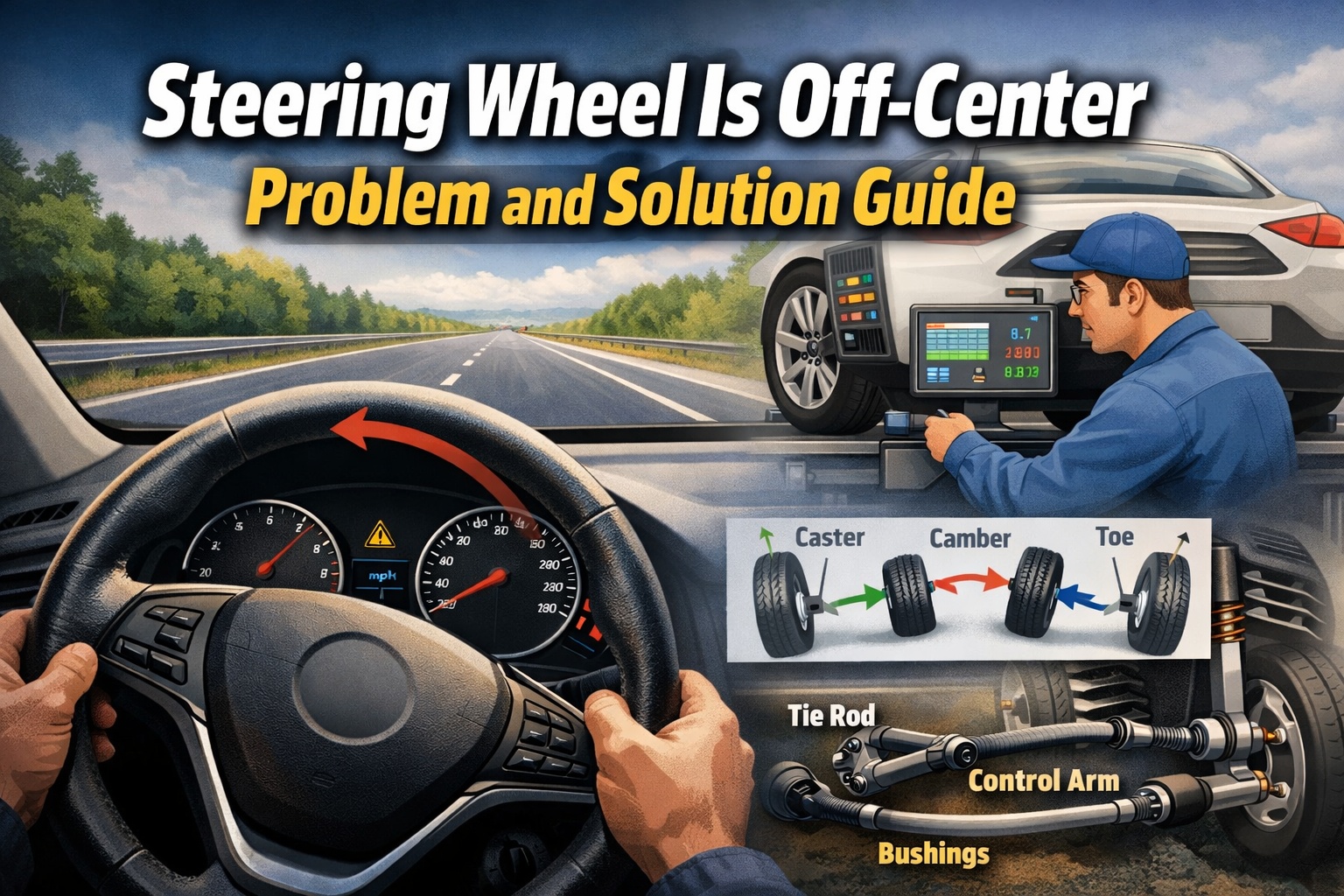
ou’re driving straight down the highway, the car feels mostly fine, but something nags at you every second: the steering wheel is slightly turned even though you’re going straight. It’s one of those issues many drivers ignore at first, especially car buyers focused on bigger-ticket concerns like engine health or mileage. Still, a steering wheel is off-center problem and solution question matters more than it seems. That crooked wheel can be a warning sign of alignment problems, suspension wear, or even prior accident damage. Over time, it can lead to uneven tire wear, compromised handling, and unexpected repair bills.
This guide is written specifically for car buyers and informed drivers who want clarity, not jargon. We’ll break down why a steering wheel ends up off-center, how to tell if it’s a minor alignment issue or something more serious, and what fixes actually work. You’ll also learn what this symptom can reveal about a used car’s history, how much repairs typically cost, and when it’s safe to keep driving versus when you should stop and investigate. By the end, you’ll know exactly how to approach an off-center steering wheel with confidence instead of guesswork.
Why Your Steering Wheel Ends Up Off-Center
A steering wheel doesn’t drift off-center randomly. In most cases, it’s the result of mechanical geometry being slightly out of balance. The most common cause is improper wheel alignment. Modern vehicles rely on precise alignment angles—toe, camber, and caster—to keep the car tracking straight while the steering wheel remains level. When these angles shift, even by a small amount, the wheels may still roll forward, but the steering wheel will no longer sit straight.
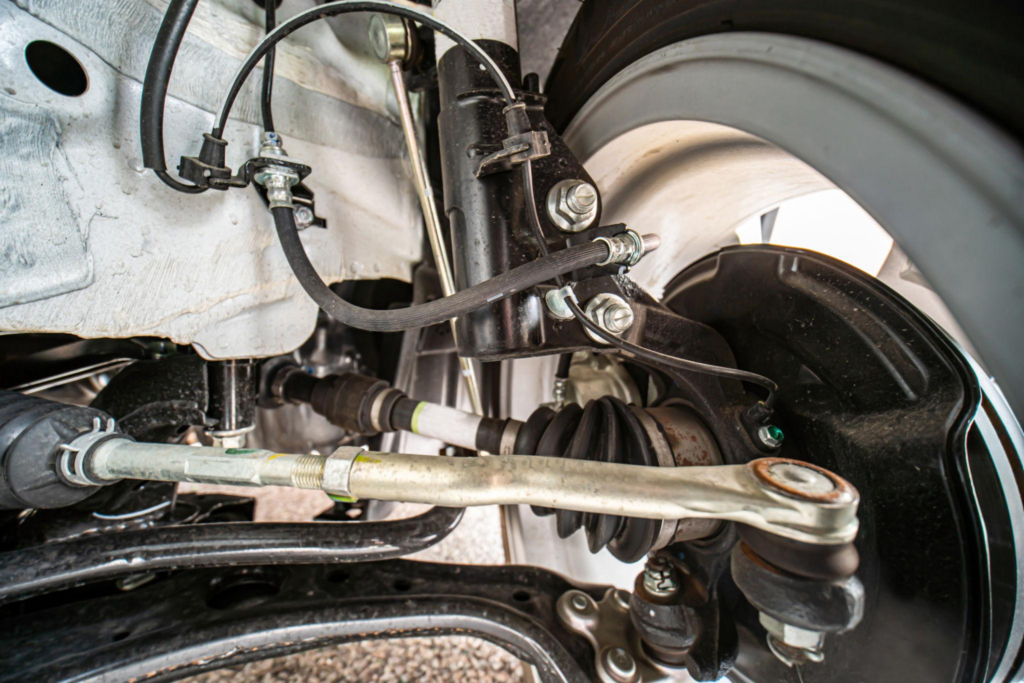
Another frequent reason is worn or damaged suspension components. Tie rods, control arms, bushings, and ball joints all play a role in keeping the wheels positioned correctly. When one side wears more than the other, the steering system compensates, and the steering wheel ends up tilted. This is especially common on cars that have seen rough roads, potholes, or curb impacts. Even a single hard hit can knock things slightly out of spec without causing obvious damage.
For car buyers, an off-center steering wheel can also hint at accident repairs that weren’t finished properly. After collision work, a shop might replace parts but skip a precise alignment or fail to center the steering wheel during calibration. The car may drive “okay,” but the steering wheel position tells a different story. From a buyer’s perspective, this symptom is a small clue that deserves closer inspection, because it often reveals how carefully the car was maintained or repaired in the past.
Alignment Issues vs. Suspension Problems
Not every off-center steering wheel points to the same fix, and understanding the difference matters for both cost and safety. Alignment issues are the simpler and more common scenario. When alignment is off, the wheels are no longer pointing in perfect harmony with the vehicle’s centerline. The car might still track straight due to compensations in the steering system, but the steering wheel ends up rotated. In these cases, a professional four-wheel alignment often resolves the problem quickly.
Suspension problems, on the other hand, are more complex. Worn tie rods or control arm bushings allow extra movement in the wheel assembly. This movement changes alignment dynamically as you drive, meaning the steering wheel position can vary depending on speed, braking, or road conditions. If a technician attempts an alignment without fixing worn parts first, the wheel may appear centered initially but drift again soon after.
For car buyers evaluating a used vehicle, this distinction is critical. A simple alignment is relatively inexpensive and usually not a deal-breaker. Suspension wear suggests higher repair costs and may indicate that other maintenance items were neglected. A good test drive can help differentiate the two. If the steering wheel is off-center but the car feels stable and predictable, alignment is likely. If the steering feels loose, vague, or inconsistent, suspension components may be the real culprit.
How Road Conditions and Driving Habits Contribute
Even well-maintained cars can develop an off-center steering wheel due to real-world driving conditions. Potholes, uneven road surfaces, and speed bumps put repeated stress on suspension and steering components. Over time, these impacts gradually shift alignment angles. Urban drivers who frequently encounter rough roads are especially prone to this issue, even if they follow regular service intervals.
Driving habits also play a role. Aggressive cornering, hard braking, and frequent curb contact when parking all accelerate wear on steering and suspension parts. In some cases, the steering wheel may become off-center after tire replacement if the alignment wasn’t checked afterward. Many drivers assume new tires automatically mean proper alignment, but that’s not always true.
For car buyers, this context matters because it helps explain why an otherwise clean, low-mileage car might still show this symptom. It’s not always a red flag, but it is a prompt to ask questions. Was the car driven mostly in the city? Were alignments performed regularly? The answers help you decide whether you’re looking at normal wear or a sign of deeper issues.

Safety Implications You Shouldn’t Ignore
An off-center steering wheel is more than a cosmetic annoyance. Over time, misalignment leads to uneven tire wear, which shortens tire life and reduces grip. This is particularly noticeable in wet conditions, where unevenly worn tires can compromise braking and stability. For car buyers, this can mean inheriting a problem that quickly turns into a tire replacement expense.
There’s also the issue of driver fatigue and reaction time. When the steering wheel isn’t centered, drivers subconsciously apply constant correction to keep the car straight. This small but continuous effort increases fatigue on long drives and can delay reactions in emergency situations. In severe cases, misalignment can affect electronic stability control and driver-assistance systems that rely on accurate steering angle data.
From a safety standpoint, ignoring this issue isn’t wise. While the car may feel drivable, the underlying imbalance can worsen over time. Addressing it early not only saves money but also restores predictable handling, which is especially important for anyone buying a used car with unknown driving history.
Diagnosing the Problem Before You Fix It
Before spending money on repairs, proper diagnosis is essential. A simple road test can reveal a lot. Drive on a straight, flat road and briefly loosen your grip on the steering wheel. If the car tracks straight but the wheel stays tilted, alignment is the likely issue. If the car pulls to one side or feels unstable, suspension or tire problems may be involved.
Visual inspection helps too. Uneven tire wear patterns often point to alignment issues. Feathered edges, excessive wear on one side, or mismatched wear between left and right tires are all clues. During a pre-purchase inspection, asking a mechanic to check steering and suspension components can uncover worn parts that aren’t obvious during a short test drive.
For car buyers, this step is especially valuable. A modest inspection fee can save you from unexpected repair costs later. It also gives you leverage in negotiations if issues are found. Understanding the root cause turns the steering wheel is off-center problem and solution discussion into a practical decision instead of a guess.
How to Fix an Off-Center Steering Wheel
In most cases, the fix starts with a professional alignment. A modern four-wheel alignment recalibrates all wheels to factory specifications and centers the steering wheel correctly. When performed properly, this restores straight-line driving and eliminates the tilted wheel. It’s a relatively quick procedure and often the first step recommended by technicians.
If worn components are discovered, those must be replaced before alignment. Tie rods, ball joints, or bushings that allow excess movement will prevent the alignment from holding. Replacing these parts may increase the repair cost, but it ensures the fix is permanent rather than temporary. For buyers, knowing this helps set realistic expectations about ownership costs.
In rare cases, steering wheel centering may involve recalibrating the steering angle sensor, especially on newer vehicles with advanced driver-assistance systems. Skipping this step can leave warning lights on or cause electronic systems to behave unpredictably. A proper fix addresses both mechanical alignment and electronic calibration, restoring the vehicle to intended behavior.
What This Means for Car Buyers
For someone shopping for a used car, an off-center steering wheel should trigger curiosity, not panic. It’s one of those details that reveals how the car was driven and maintained. In many cases, it’s a simple alignment issue that can be resolved easily. In others, it points to neglected maintenance or previous repairs that weren’t done thoroughly.
The key is context. Combine what you feel during the test drive with inspection results and service records. If everything else checks out, this issue can even work in your favor during negotiations. Sellers are often willing to adjust the price or fix the problem before closing the deal.
Ultimately, understanding this issue empowers you as a buyer. Instead of overlooking it or assuming the worst, you can evaluate it calmly and make an informed decision. That confidence is what separates a stressful purchase from a smart one.
Quick Takeaways
- An off-center steering wheel often points to alignment or suspension issues rather than a steering defect.
- Improper wheel alignment is the most common and least expensive cause.
- Worn suspension parts can prevent alignments from holding and require replacement.
- Ignoring the issue can lead to uneven tire wear and reduced safety.
- For car buyers, this symptom can reveal maintenance history or prior repairs.
- Proper diagnosis before fixing saves money and prevents repeat problems.
An off-center steering wheel might seem like a small annoyance, but it carries meaningful information about a vehicle’s condition. In most cases, it’s a straightforward alignment issue that can be resolved quickly. In others, it highlights suspension wear or incomplete repairs that deserve attention. For car buyers, recognizing and understanding this symptom adds another layer of confidence to the purchase process. Instead of guessing or ignoring it, you can evaluate the cause, estimate the fix, and decide how it affects the car’s value. Addressing the problem early improves safety, preserves tires, and restores proper handling. Whether you’re buying, selling, or simply maintaining your car, knowing the causes and solutions behind an off-center steering wheel helps you make smarter, calmer decisions every time you’re behind the wheel.
FAQs
- Can I keep driving if my steering wheel is off-center?
Yes, but it’s not ideal. Continued driving can accelerate tire wear and mask underlying suspension problems. - Is an off-center steering wheel always an alignment issue?
No. While alignment is common, worn tie rods or bushings can also cause this symptom. - How much does it cost to fix a steering wheel that’s off-center?
A basic alignment is usually affordable, but suspension repairs increase the total depending on parts needed. - Should I worry about this when buying a used car?
It’s worth investigating. It can be minor, but it may also indicate neglected maintenance. - Will new tires fix an off-center steering wheel?
New tires alone won’t solve the problem. Alignment and component checks are still necessary.
If you’ve experienced a steering wheel that just doesn’t sit straight, we’d love to hear your story. Did it turn out to be a simple fix or something more involved? Share your experience, and if you found this guide helpful, consider passing it along to another car buyer who might need it too.


