







Few driving sensations are as unsettling as a car that shakes when you press the brake pedal. Whether it’s a subtle vibration in the steering wheel or a violent shudder through the entire vehicle, braking-related shaking immediately raises concerns about safety, repair costs, and whether the car is still roadworthy. For car buyers, especially those considering a used vehicle, this symptom is a major red flag that deserves careful attention.
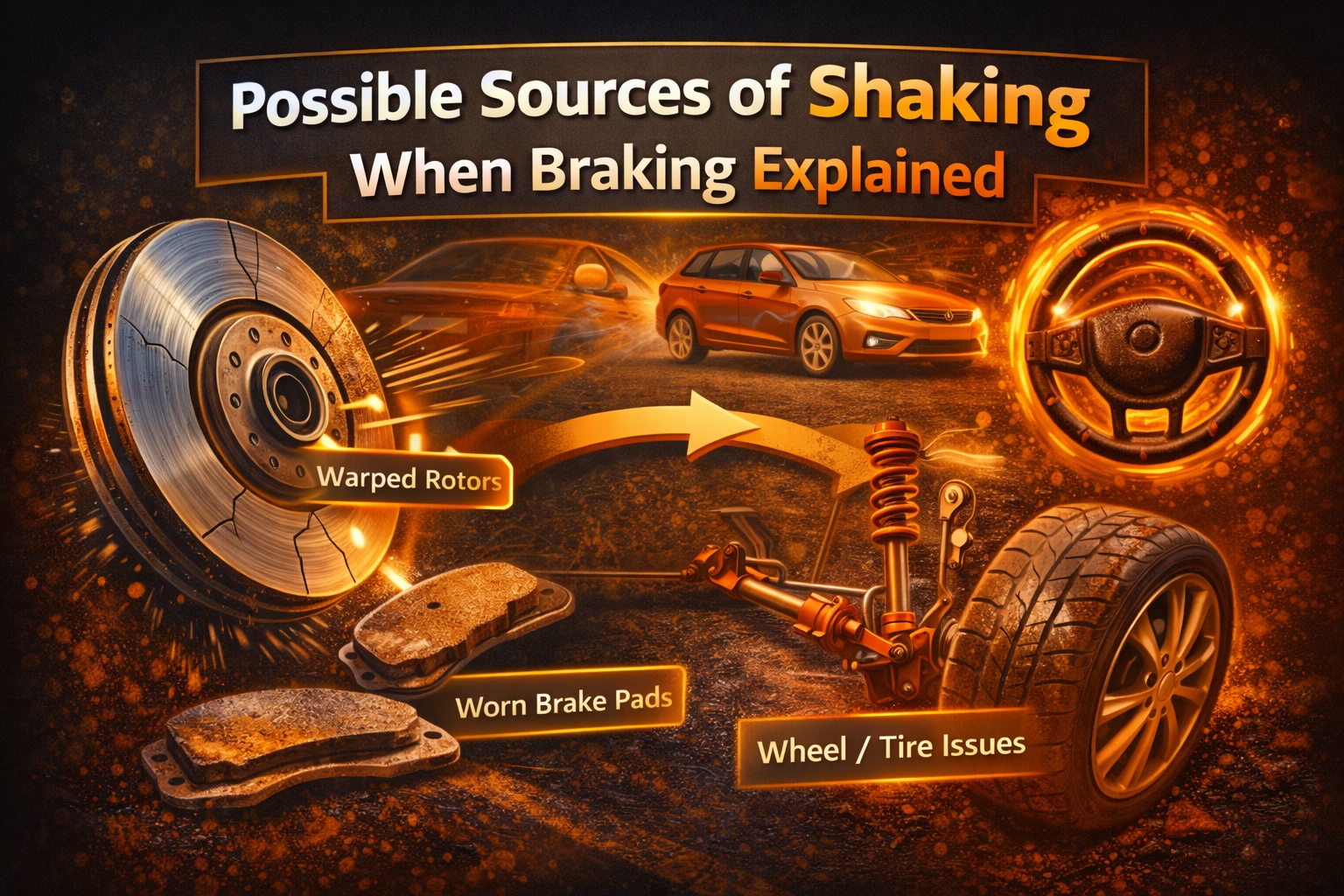
The truth is that possible sources of shaking when braking are more varied than most drivers realize. While warped brake rotors are the most commonly blamed culprit, worn brake pads, uneven pad deposits, suspension wear, wheel issues, and even tire problems can all contribute to braking vibrations. Misdiagnosing the cause can lead to unnecessary repairs or, worse, ignoring a serious safety issue.
In this guide, we’ll break down exactly why cars shake when braking, focusing on the differences between rotor-related problems and pad-related issues, while also explaining other mechanical factors that can mimic brake vibration. By the end of this article, you’ll know how to identify warning signs, understand what’s happening mechanically, and make smarter decisions whether you’re maintaining your current vehicle or evaluating one before purchase.
How Braking Systems Work and Why Vibrations Happen
The Basic Mechanics of Braking
When you press the brake pedal, hydraulic pressure forces brake pads against the spinning brake rotors. The friction between pads and rotors converts motion into heat, slowing the vehicle. Ideally, this process is smooth and evenly distributed across the rotor surface.
Why Smooth Braking Matters
Smooth braking relies on:
- Flat, evenly thick rotors
- Pads making consistent contact
- Stable suspension components keeping wheels aligned
If any part of this system is compromised, vibrations occur. These vibrations are felt most strongly during braking because that’s when forces are highest.
Why Vibrations Are Often Misdiagnosed
Many drivers assume shaking automatically means “bad brakes,” but the braking system interacts with suspension, steering, wheels, and tires. That’s why identifying the true source matters.
Unique Insight:
Braking vibrations are often the result of multiple small issues combining, not a single failed component.
Warped Brake Rotors: The Most Common Culprit
What “Warped Rotors” Really Means
Despite the name, brake rotors rarely warp like a bent plate. Instead, they develop uneven thickness, known as rotor thickness variation. This creates inconsistent braking forces as the rotor spins.
How Rotor Problems Cause Shaking
As the brake pads clamp down:
- Thicker rotor sections grab harder
- Thinner sections grab less
- The braking force pulses rapidly
This pulsing is transmitted through the suspension and steering wheel.
Common Causes of Rotor Issues
- Overheating from aggressive braking
- Improper lug nut torque
- Low-quality rotor materials
- Holding brakes after hard stops
How It Feels While Driving
- Steering wheel shakes during braking
- Vibration increases with speed
- Pedal may pulse underfoot
Why This Matters for Car Buyers
Warped rotors are common on used cars that were driven hard or poorly maintained. While rotor replacement isn’t the most expensive repair, ignoring it can damage pads and suspension parts.
Unique Insight:
Most “warped rotor” complaints are actually caused by uneven pad material transfer, not metal deformation.
Brake Pad Issues That Mimic Rotor Problems
Uneven Pad Deposits
Brake pads transfer a thin layer of material onto rotors during normal operation. If this transfer becomes uneven, braking force fluctuates and causes vibration similar to warped rotors.
Low-Quality or Mismatched Pads
Pads made from poor compounds or mismatched to rotor material can:
- Create excessive heat
- Leave uneven deposits
- Cause squealing and vibration
Worn or Glazed Brake Pads
Pads that are:
- Worn unevenly
- Heat-glazed
- Contaminated
can’t maintain consistent friction, leading to shaking.
Why Pads Are Often Overlooked
Because rotors are more visible and easier to blame, pad issues are frequently ignored. Replacing rotors without addressing pad problems often leads to vibration returning quickly.
Unique Insight:
Many brake vibrations disappear after proper pad bedding, proving rotors weren’t the root problem.
Suspension and Steering Components as Hidden Sources
Why Suspension Matters During Braking
Braking transfers weight forward, placing extra stress on:
- Control arms
- Ball joints
- Tie rods
- Bushings
If these parts are worn, they allow excessive movement that feels like brake vibration.
Common Suspension-Related Symptoms
- Shaking only during hard braking
- Wandering steering feel
- Clunking over bumps
Used-Car Buyer Warning
Suspension issues often reveal themselves only during braking or high-speed driving — conditions some test drives never reach.
Unique Insight:
A car with perfect brakes can still shake violently if suspension components can’t control wheel movement under load.
Wheel, Tire, and Hub Issues That Cause Brake Shudder
Wheel Balance and Runout
Out-of-balance wheels or bent rims can amplify vibrations during braking, especially at highway speeds.
Tire Defects
Tires with:
- Flat spots
- Internal belt separation
- Uneven wear
can transmit vibration through the brake system.
Wheel Bearings and Hubs
Worn bearings can create vibration that becomes more noticeable when braking due to increased load.
Unique Insight:
Brake vibrations that remain after rotor replacement often originate from wheel or tire problems.
How to Diagnose the Possible Sources of Shaking When Braking
Pay Attention to When It Happens
- Only at high speeds?
- Only when braking hard?
- Steering wheel vs brake pedal vibration?
Each clue points toward a different cause.
Test Drive Strategy for Buyers
- Brake gently and aggressively
- Try different speeds
- Note steering wheel movement
Professional Inspection Advantage
A thorough inspection includes:
- Measuring rotor thickness variation
- Checking pad condition
- Inspecting suspension and wheel components
Unique Insight:
A vibration felt in the steering wheel usually points to front components, while seat vibration often indicates rear issues.
Quick Takeaways
- Possible sources of shaking when braking go beyond just brake rotors
- Warped rotors usually mean uneven thickness, not bent metal
- Brake pads can cause vibration through uneven material transfer
- Suspension wear often mimics brake problems
- Tire and wheel issues can amplify braking vibrations
- Accurate diagnosis prevents unnecessary repairs
- Test drives should always include firm braking
Braking vibrations are your car’s way of telling you something isn’t right, but the cause isn’t always obvious. While warped rotors are the most common explanation, worn brake pads, uneven pad deposits, suspension problems, and wheel or tire defects can all create similar symptoms. For car buyers, understanding these differences is essential to avoid misjudging a vehicle’s condition or underestimating repair costs. Proper diagnosis saves money, improves safety, and restores confidence behind the wheel. Whether you’re maintaining your current car or evaluating a used one, paying attention to how a vehicle behaves during braking is one of the smartest steps you can take.
FAQs
- Can brake pads alone cause shaking when braking?
Yes, uneven or glazed pads can cause vibration even if rotors are in good condition. - Is steering wheel shake always a rotor problem?
No, suspension or tire issues can also cause steering wheel vibration during braking. - Can shaking when braking be dangerous?
Yes, it often indicates reduced braking efficiency or compromised control. - Will resurfacing rotors fix braking vibration?
Sometimes, but underlying pad or suspension issues must also be addressed. - Should I avoid buying a car that shakes when braking?
Not necessarily, but the cause should be identified and factored into repair costs.
Have you ever experienced shaking when braking and been surprised by the diagnosis? Share your experience in the comments, and if this guide helped you understand the possible sources of shaking when braking, consider sharing it with other car buyers who may be facing the same concern.